
When the Doors Close: Why Uganda’s Community Health Systems Cannot Afford to Fail
Written By Maxine Ansah

|
Getting your Trinity Audio player ready...
|
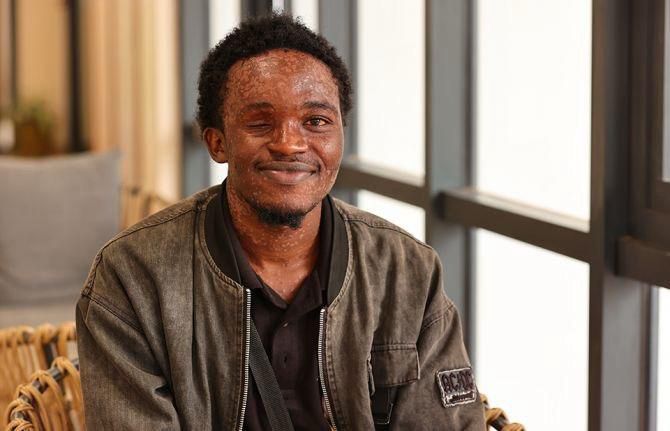
In early 2025, 22-year-old Jokpee Emmanuel made his usual journey to Reach Out Mbuya in Kampala, Uganda, expecting to attend the Friends Forum: a safe space where young people living with HIV gather, share experiences and offer each other support. Instead, he found a sign on the gate that read:
“Due to the suspension of United States funding, Reach Out Mbuya will be closed for 90 days. We regret the inconvenience caused.”
For Jokpee, born with HIV, this closure was more than an inconvenience. Reach Out Mbuya had been a cornerstone of his life, providing access to antiretroviral therapy, emotional support, help with school fees and, above all, dignity.
“Reach Out was like a second home,” he said. “They did not just give me medicines. They cared for me and reminded me that I am more than my diagnosis. I could live a full life.”
The closure came after a suspension of United States funding through the President’s Emergency Plan for AIDS Relief (PEPFAR). For nearly two decades, PEPFAR has played a critical role in supporting community-led HIV responses in Uganda and other low-resource settings. Its impact has been profound: since 2004, PEPFAR has helped save over 25 million lives globally and prevented millions of new HIV infections, according to UNAIDS and the US Department of State.
Community-led and community-based initiatives like Reach Out Mbuya do far more than dispense medicines. They address the social and economic realities of clients’ lives, foster trust and provide care that feels personal. Studies published in journals such as The Lancet Public Health have shown that these models improve adherence to treatment and quality of life, especially for marginalised populations who may not feel comfortable or safe seeking care from larger government-run hospitals.
Jokpee’s experience illustrates the consequences when this support is withdrawn. Forced to seek care at an overcrowded government facility, he waited six hours, only to hear there was no antiretroviral medicine available that day.
“A week without antiretroviral medicines! That is how resistance develops. That is how people die,” he said.
Eventually, he received a one-month supply, but the fear of further shortages remained.
Although the Government of Uganda worked to fill the gap, national health facilities could not match the reach, flexibility and personal connection offered by community-based programmes. After several weeks, Reach Out Mbuya reopened with support from the Kampala HIV Project, a PEPFAR-funded initiative. Many staff returned, and core services resumed. Yet the number of clients visiting the centre has yet to return to previous levels, as trust and continuity take time to rebuild.
Jokpee’s story is not unique. It is a stark reminder of how quickly years of progress can be reversed when community health systems lose critical support. Community-led organisations have been central to Uganda’s HIV response. As the Joint United Nations Programme on HIV/AIDS (UNAIDS) stresses, sustainable, people-centred health systems are vital to ending AIDS as a public health threat by 2030.
The lesson is clear: investing in community-led responses is not an optional extra. It is the backbone of public health, particularly for people society too often overlooks. As Uganda and its partners look ahead, protecting and strengthening these lifelines must remain a global priority.