
Millions Face Deepening Hunger as Funding Crisis Hits South Sudan
Written By Maxine Ansah

|
Getting your Trinity Audio player ready...
|
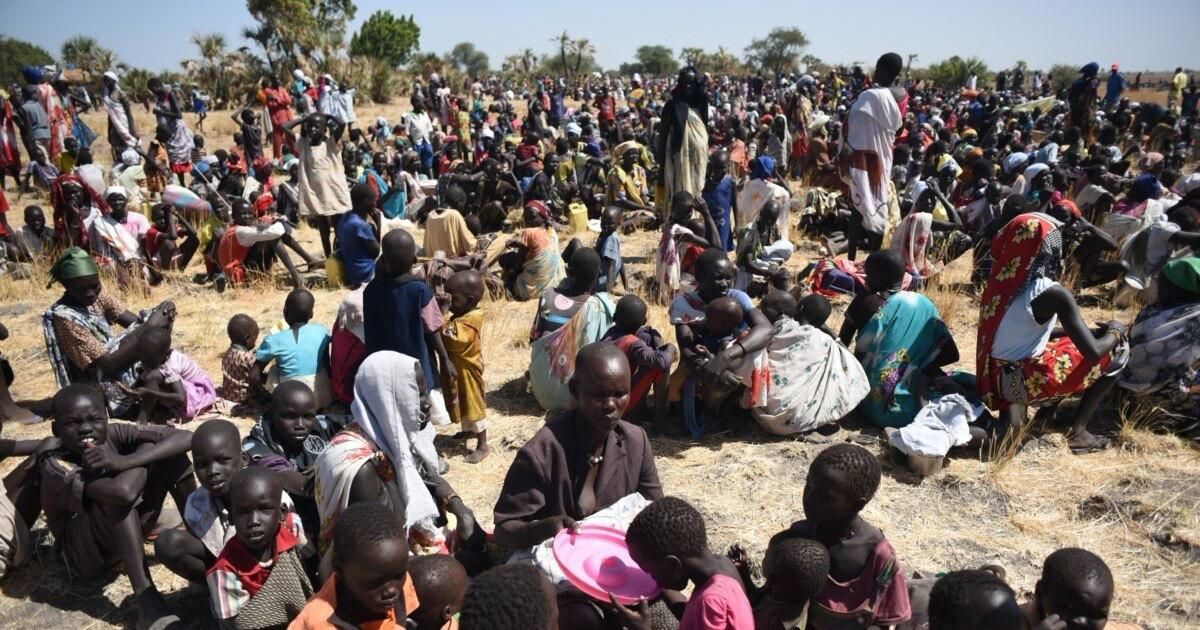
JUBA, South Sudan: Half of South Sudan’s population, around 7.7 million people, are facing severe hunger this year, according to the United Nations World Food Programme (WFP). Of these, 83,000 people are enduring catastrophic levels of food insecurity, known as IPC5, the most extreme classification.
Fighting in Upper Nile State since March has displaced thousands and sharply restricted humanitarian access. Two counties, Nasir and Ulang, are now at risk of descending into famine. Among those affected are 39,000 people who have returned to South Sudan after fleeing conflict in Sudan. At the same time, a record 2.3 million children are now at risk of malnutrition, with the most severe impacts seen in conflict-hit areas of Upper Nile and flood-affected parts of Bentiu.
Despite the scale of the crisis, the WFP has managed to reach over two million of the most vulnerable people in South Sudan this year. Carl Skau, WFP Deputy Executive Director and Chief Operating Officer, who visited South Sudan from 17 to 20 July, stressed the urgency of the situation:
“The scale of the humanitarian needs in South Sudan is staggering. But the scale of suffering here does not make headlines. Whether it is families trapped every year by flooding in Unity State or others trapped by conflict in Upper Nile State, millions of mothers, fathers, and children spend each day fighting hunger to survive,” Skau said.
He added, “WFP is here, providing whatever assistance we can, however we can. But rising needs and shrinking resources are forcing us to scale back, even in places where people are on the brink of famine. WFP has the expertise, the teams, and the capacity to deliver, even in the most remote and challenging environments, but without sufficient funding and a period of peace, our hands are tied.”
WFP Operations on the Ground
In response to the deepening crisis, WFP has undertaken large-scale efforts to deliver life-saving assistance. In July, the agency carried out airdrops of 430 metric tonnes of food to some of the most isolated areas of the Greater Upper Nile region. These airdrops are ongoing and aim to support around 40,000 people facing the highest risk.
For the first time in months, river convoys on the White Nile River have resumed following a temporary improvement in security conditions. On 16 July, a convoy left Bor carrying 1,380 metric tonnes of food aid and essential non-food items destined for Upper Nile State. River routes remain the most cost-effective means of transporting aid in a country where road networks are extremely limited.
The WFP-run United Nations Humanitarian Air Service (UNHAS) also continues to play a critical role. Flights are currently serving seven destinations in Upper Nile, including Maban, Maiwut, Malakal, Mandeng, Mathiang, Renk and Ulang, transporting supplies and humanitarian workers into some of the most inaccessible parts of the country.
In addition, a cholera outbreak has added to the humanitarian emergency. Since March, the WFP-led Logistics Cluster has airlifted 109 metric tonnes of cholera response supplies to affected areas in Upper Nile and Unity States.
A Fragile Progress Undone by Funding Shortfalls
The funding outlook for the remainder of the year is dire. WFP warns that severe funding shortfalls mean it can only reach about 2.5 million people with regular assistance, barely 30 per cent of those facing severe hunger. The agency urgently needs US$274 million to continue this limited support through the end of the year, which in most cases amounts to only 50 per cent of standard rations.
Without additional funds, further reductions in food rations and coverage will be unavoidable from September. This could erase fragile gains made in areas like Uror County in Jonglei State, where pockets of catastrophic hunger were alleviated earlier this year through sustained assistance.
Skau underscored the long-term potential of South Sudan if peace can be maintained and resources mobilised.
“This is a country endowed with natural resources and a vibrant youthful population. It is time to unlock its full potential,” he said.
Read Also: The Voice of Africa is Now Inside the United Nations