

|
Getting your Trinity Audio player ready...
|
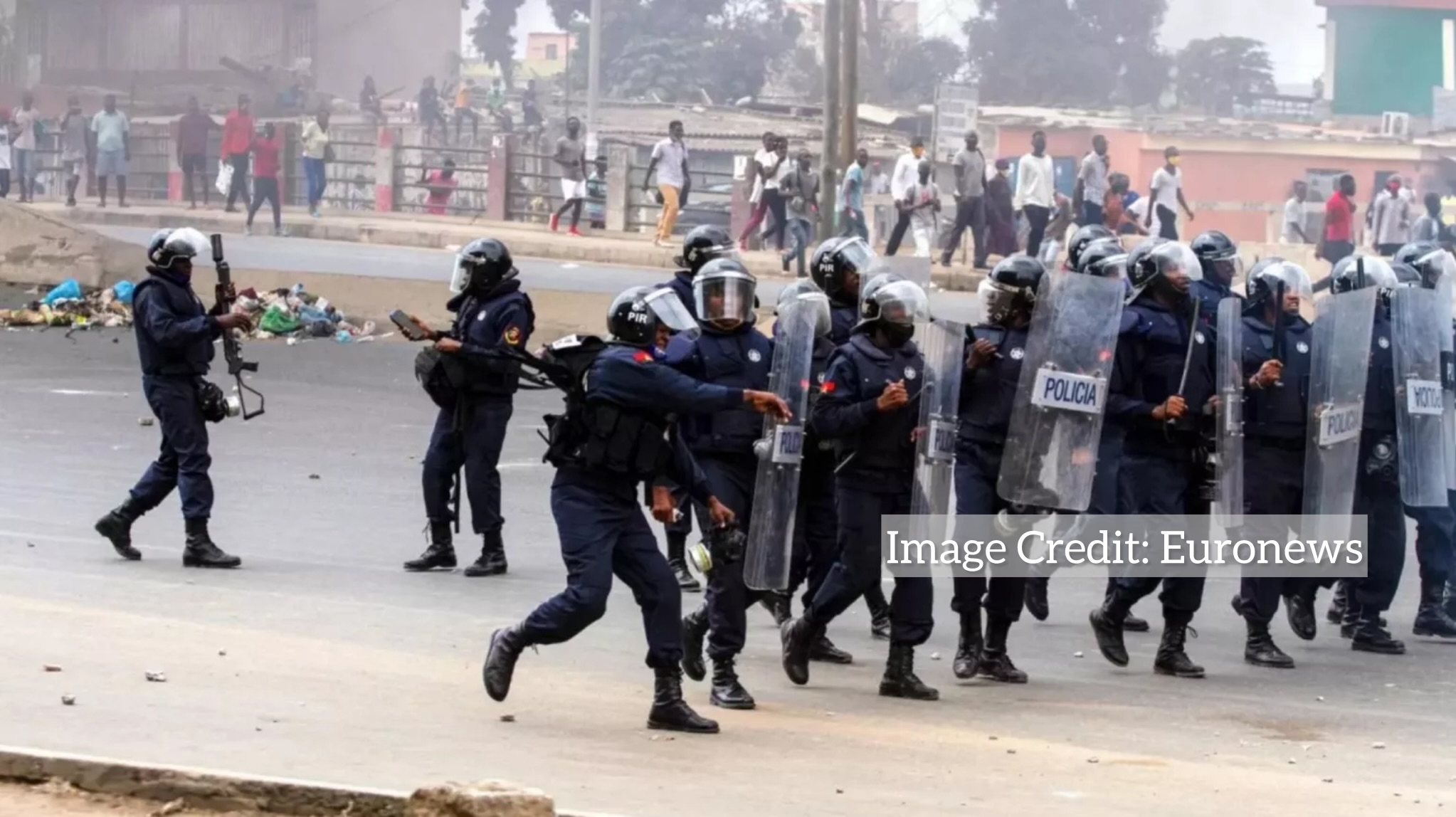
Angola has been engulfed in violent unrest following a nationwide backlash against a recent spike in fuel prices. What began as a planned three-day strike by taxi drivers in Luanda has rapidly expanded into widespread protests marked by destruction, confrontations with security forces, and growing public outrage. Authorities report that at least four individuals have died, and over 500 people have been arrested.
The protests were initially triggered by the government’s move to cut fuel subsidies, which led to a more than 33% increase in diesel prices. Taxi drivers, who are heavily dependent on affordable fuel to operate, initiated the strike in response. However, the fuel issue served as a tipping point, bringing broader social and economic frustrations to the surface. The price hike has also impacted food and transport costs, worsening the daily struggles of many citizens.
By Monday, the demonstrations had intensified. Thousands of people filled the streets of Luanda, blocking roads, destroying vehicles, and looting shops. Sporadic gunfire was reported in some neighborhoods, and the unrest spilled into Tuesday, spreading beyond the capital to cities such as Huambo. Police clashed with demonstrators in several areas and have since maintained a visible presence in the streets, warning they will continue to intervene to restore calm.
President João Lourenço has downplayed the protests, suggesting the unrest is being used by some to undermine the government. In a recent interview, he defended the fuel pricing decision, pointing out that, even after the increase, diesel in Angola remains among the cheapest globally. However, with average monthly incomes around $75, many Angolans say the rising cost of living is becoming unbearable. A previously announced wage increase to 100,000 kwanzas has yet to be implemented.
Civic voices and activists have highlighted that the demonstrations reflect deeper grievances. According to local activist Laura Macedo, the population is not only reacting to economic challenges but also expressing discontent with decades of political stagnation. She emphasized that hunger, poverty, and a sense of hopelessness are driving people to take to the streets.
As events unfolded, state-controlled media outlets received criticism for failing to provide real-time coverage, opting instead to continue with scheduled programming. This has fueled further distrust among the public toward official channels.
In response, the ruling MPLA party released a statement accusing protestors of attempting to disrupt national unity and festivities surrounding the country’s upcoming 50th anniversary of independence. The party also urged young people to refrain from participating in what it described as “acts of vandalism.” Meanwhile, Luanda’s local government claimed that the original taxi strike had been called off after successful negotiations, attributing the continued protests to unauthorized individuals acting outside any formal representation of the taxi sector.
Despite distancing themselves from the violence, a major taxi association reaffirmed its commitment to the strike. The group declared that the concerns of taxi operators mirror those of ordinary citizens and insisted that peaceful protest must continue as a form of civil expression.
By Tuesday afternoon, most major businesses in Luanda, including banks and supermarkets, remained closed. While some civil servants had resumed work, many employees in the private sector stayed home due to safety concerns. The situation remains tense, and the possibility of further unrest cannot be ruled out.
The unfolding crisis highlights not just economic fragility, but also the urgency of political and social reform. As Angola approaches its golden jubilee of independence, many citizens are demanding more than symbolic celebrations, they seek accountability, equity, and relief from worsening living conditions.