
A Silent Crisis: Contraceptive Shortages Threaten Women’s Health in Kenya
Written By Maxine Ansah

|
Getting your Trinity Audio player ready...
|
NAROK COUNTY, Kenya – For years, Kenya has been hailed as a leader in expanding access to family planning services. Today, that progress is under threat as contraceptive stocks dwindle, leaving millions of women at risk of unintended pregnancies, unsafe abortions and preventable deaths.
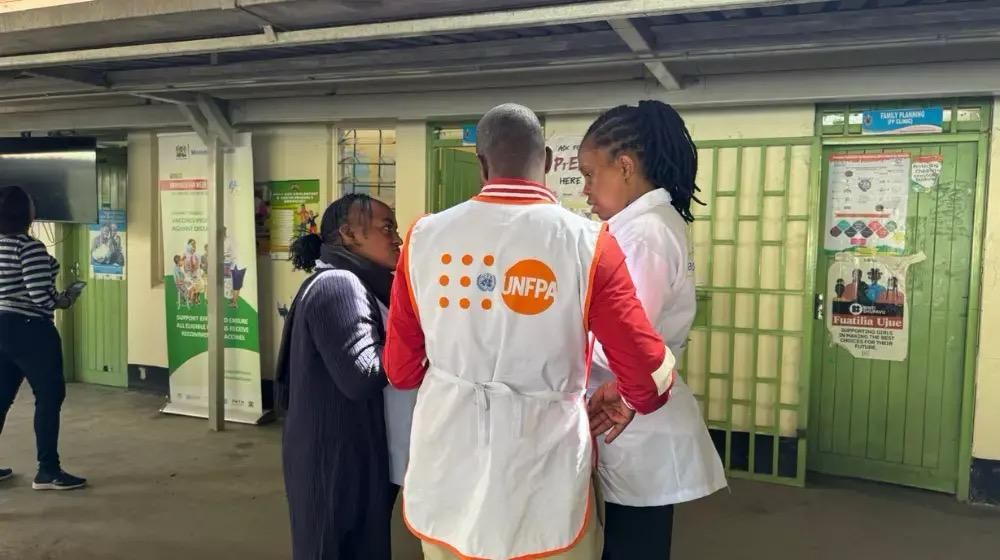
In Narok County, a vast rural region known globally for the Maasai Mara, health workers are already struggling to cope. At Ololulung’a Sub-County Hospital, nurse Jacqueline speaks candidly about the daily realities. Her workload is heavy, but her bigger challenge is stockouts of the most commonly used contraceptives. Injectables, the preferred method among many women, are completely unavailable.
“I only have the three-year Levoplant implant,” she said. “I do not have the five-year or a hormonal IUD. The longer-term methods are available but they are not so popular.”
The lack of choice is not limited to one facility. At Narok County Referral Hospital, pharmacist Dr. Felistas Misati uses the national Logistics Management Information System to track supplies. The system shows injectables are stocked out countrywide. Even implants are arriving in fractions, with the county receiving only one fifth of what was requested in the last delivery.
Facilities have tried to reallocate what little stock remains along the supply chain, but those reserves are almost depleted.
The cost of dwindling options
Some women are able to switch to available options, such as condoms, which are currently projected to last through 2025 thanks to UNFPA support. But not every method is interchangeable. The choice of contraception is not simply about convenience. For many women, it is about safety, autonomy and survival.
Injectables, for instance, are often chosen because they can be used discreetly. In many households, men strongly oppose family planning, sometimes violently. Evans Nyabwari, a nurse and reproductive health coordinator in Narok, explained that if women are discovered to be using contraceptives, their partners may react with aggression.
“There was a time when a lady came for an implant, and when the husband realised, he almost cut it out with his knife,” said Elizabeth Samanta, the community health focal point for Narok North.
Women have even started requesting implants to be placed in their thighs rather than their arms to avoid discovery. Emma Kugotha, reproductive health coordinator in Narok South, has seen women return implants in boxes after they were forcibly removed at home.
A system under strain
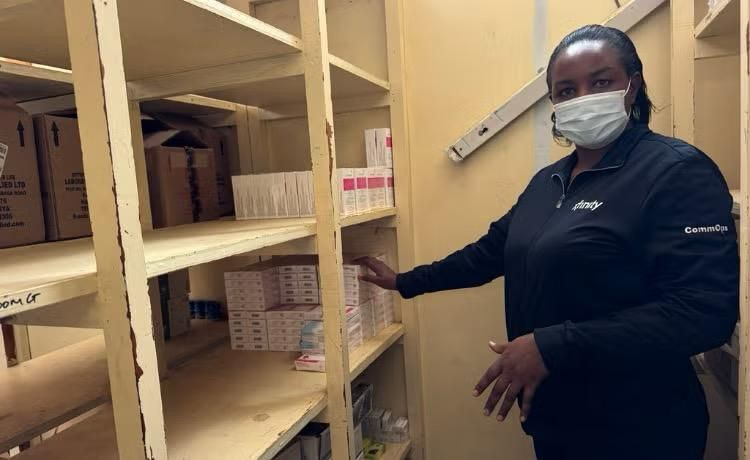
The shortages come at a time when Kenya’s reproductive health system can least afford further strain. A government report issued in March warned that the decline in donor funding could deny family planning services to more than 6.2 million clients in 2025. This is expected to increase unintended pregnancies, unsafe abortions and maternal deaths, while driving down contraceptive prevalence.
In Narok County, the risks are even higher. More than half of women have undergone female genital mutilation, and the adolescent pregnancy rate is twice the national average. Both factors heighten the likelihood of complications during pregnancy and childbirth. The county already records one of the highest maternal mortality rates in the country.
Globally, donor support for family planning has fallen to its lowest point in nearly a decade. Earlier this year, the world’s largest donor to reproductive health programmes ended its international funding altogether, leaving millions of women vulnerable.
For health workers on the ground, it is a heartbreaking reversal. Years of progress in educating women about safe, reliable contraceptives had built trust and driven demand. “You give that information to the community, and within a day you get an influx of clients,” Mr Nyabwari said.
Now, women who walk for hours across rugged terrain to reach clinics may arrive only to find empty shelves. Some will turn to private pharmacies, where prices often spike during shortages. Many others will simply go without.
A fragile promise
UNFPA has stepped in to keep supplies flowing to some facilities, procuring more than $3 million worth of contraceptives for 2025. Together with government support, this will cover about 17 per cent of the national need. The agency is also working to deliver hundreds of thousands of doses of injectable contraceptives. But these measures cannot fill the gap left by declining global aid.
For women in Narok and across Kenya, the promise of family planning is fast slipping away. What was once a symbol of progress and empowerment is becoming a fragile hope. Unless urgent action is taken to restore funding and secure reliable supplies, the hard-won gains of the past decades may soon unravel.