
Brewing Safer Workplaces: Uganda’s Coffee Sector Embraces the WIND Approach
Written By Maxine Ansah

|
Getting your Trinity Audio player ready...
|
In the rolling hills of Uganda’s coffee heartlands, a quiet transformation is taking root. Beneath the aroma of freshly dried beans and the hum of processing machinery, communities are learning how to make coffee production not only profitable but also safe, healthy and fair. The catalyst for this shift is the Workplace Improvement in Neighbourhood Development (WIND) training, an innovative participatory approach developed by the International Labour Organization (ILO) under the CLEAR Supply Chains project.
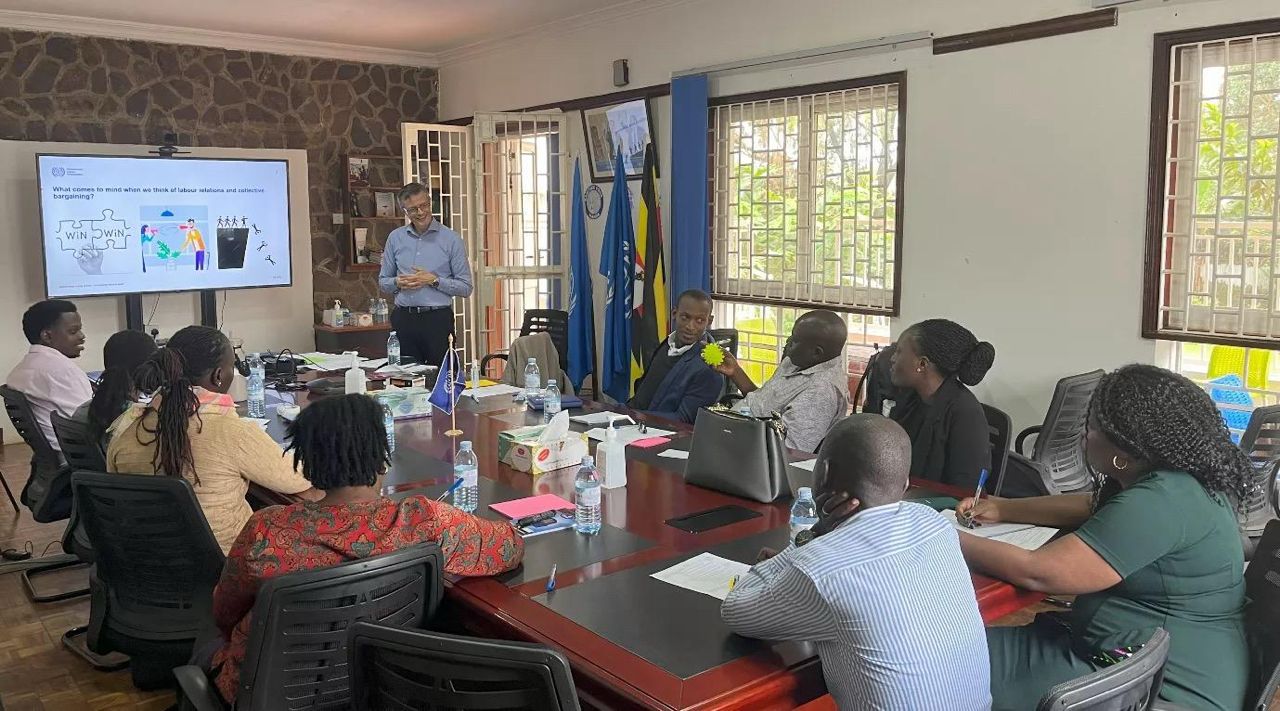
Held in September 2025, the WIND training of trainers brought together 56 participants from across Uganda’s coffee supply chain. They included agronomists from Child Labour Platform members such as Volcafe (Kyagalanyi), NKG (Ibero), and Ofi/Olam, local government representatives from six districts, officials from the Ministry of Gender, Labour and Social Development and the Ministry of Agriculture, as well as members of coffee cooperatives and partner organisations. Their shared mission was to strengthen occupational safety and health (OSH) practices across farms and processing facilities, while addressing the root causes of child labour in supply chains.
The WIND approach is rooted in the ILO’s Participatory Action-Oriented Training (PAOT) methodology, which emphasises simple, practical and community-driven improvements. Instead of relying solely on external audits or costly interventions, the method empowers workers, farmers and employers to identify risks and take action using locally available resources. The training toolkit includes the WIND action checklist, examples of local good practices, and visual guides that help participants understand OSH standards in a relatable and accessible way.
Throughout the week-long training, participants gained hands-on experience in recognising hazards and developing low-cost, context-specific solutions. The sessions focused on five key areas: material handling and storage; workstations and tools; the safe use of agricultural and electrical equipment; work environment and hazardous agents; and welfare facilities, gender-based violence, and community cooperation. These themes reflect the real challenges faced by workers in Uganda’s coffee sector, from unsafe equipment and poor ventilation to limited access to sanitation facilities.
Field visits and group exercises allowed participants to observe good practices in action and exchange ideas for adapting them to their own workplaces. The participatory design of the training encouraged peer learning, ensuring that knowledge would ripple outwards to households, cooperatives and farming communities. By the end of the workshop, each participant had developed an action plan outlining concrete steps for improving OSH conditions within their area of influence.
For many, the experience was eye-opening. It demonstrated that improving safety and health does not always require large investments but rather creativity, collaboration and commitment. A simple rearrangement of tools, proper storage of pesticides, or provision of clean drinking water can significantly reduce risks and enhance productivity.
As part of the CLEAR Supply Chains project, the WIND training complements broader efforts to eliminate child labour and strengthen decent work across agricultural value chains. By fostering safer and more inclusive workplaces, it helps build the resilience of coffee-growing communities and promotes sustainable production practices.
The ILO will continue to support the rollout phase by refining training materials, providing follow-up guidance, and monitoring the progress of implemented action plans. Participants will share updates on the improvements achieved, ensuring that the spirit of participatory change continues to flourish in Uganda’s coffee sector.
In the end, the message is simple yet powerful: when workers and farmers take ownership of workplace safety, everyone benefits. From the coffee fields of Uganda to the cups of consumers around the world, a safer supply chain begins with informed, empowered communities working together for lasting change.