
ECOWAS and ILO Empower Journalists to Tell Fair Stories on Labour Migration
By Maxine Ansah

|
Getting your Trinity Audio player ready...
|
In an important step towards transforming how labour migration is covered across West Africa, the International Labour Organization (ILO) and the Economic Community of West African States (ECOWAS) have jointly adopted a regionally adapted Media Toolkit designed to promote ethical, accurate, and rights-based journalism on labour migration and fair recruitment.
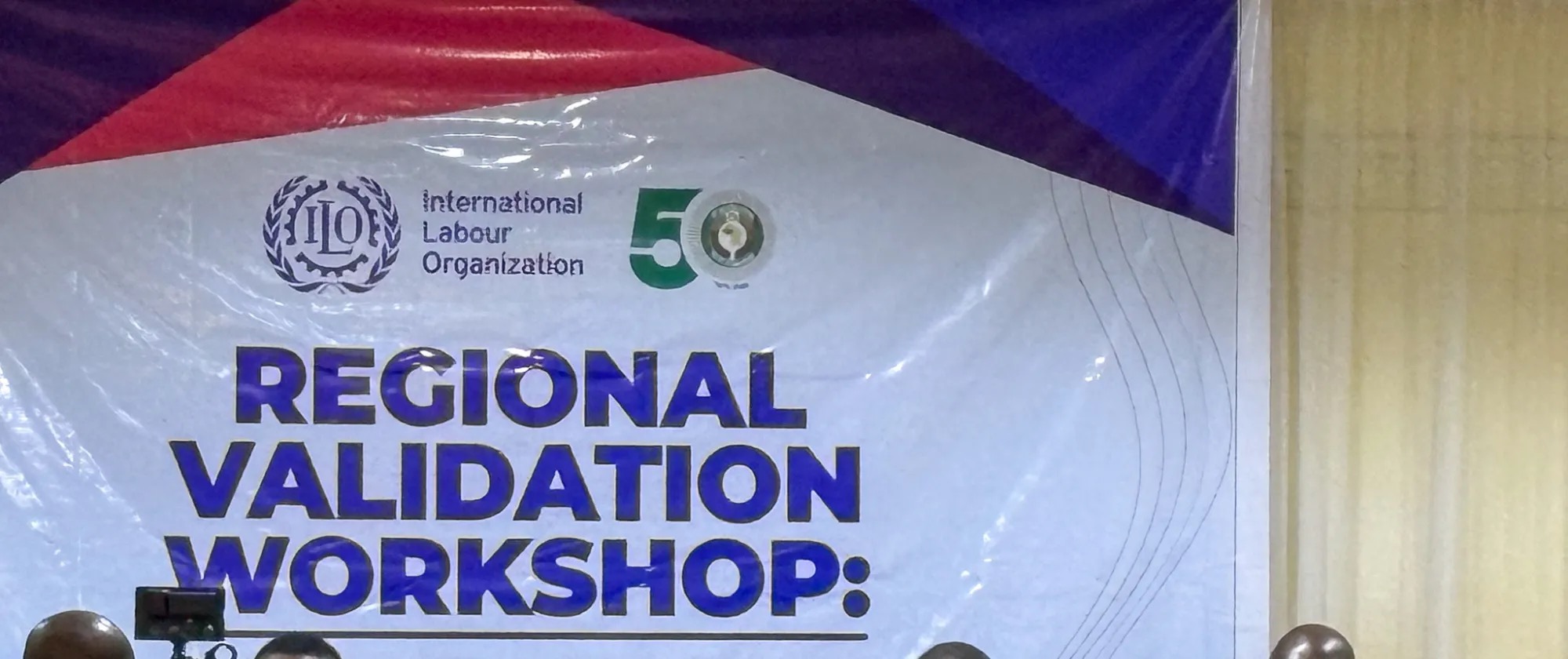
The initiative was formally launched during a Regional Adaptation Workshop held in Abuja, Nigeria, where over 50 participants gathered at the Chelsea Hotel. The workshop drew journalists, government representatives, trade union leaders, employers’ organisations, and development partners. It was implemented under the FMM West Africa II, FAIR III, and ACTION Project initiatives, with co-funding from the European Union (EU) and the Swiss Agency for Development and Cooperation (SDC).
Originally created for Southern Africa, the ILO’s Media Toolkit on Reporting Forced Labour and Fair Recruitment has now been localised to reflect West Africa’s unique realities. The revised version incorporates ECOWAS Free Movement Protocols and regional migration frameworks, while also addressing emerging issues such as climate-induced displacement, the reintegration of returnees, and the growing threat of misinformation.
“This toolkit is not just a guide; it is a call to action to inform, influence, and protect,” said Ms. Inviolata Chinyangarara of ILO-ACTRAV, who represented the ILO Country Director during the workshop. Her remarks captured the spirit of the gathering, which focused on empowering journalists to use their platforms to uphold the rights and dignity of migrant workers.
The sessions were led by international media consultant Charles Autheman and included hands-on modules on ethical storytelling, media safety, and data-driven reporting. Through interactive breakout discussions, participants exchanged experiences and developed proposals for national media engagement and regional coordination on migration coverage.
Several participants and partners shared their perspectives on the role of media in promoting responsible narratives about migration. Mr. John Odah of the Organisation of Trade Unions of West Africa (OTUWA) underlined the importance of aligning media efforts with ECOWAS principles of free movement. Mr. Thompson Akpabio of the West African Platform of Labour and Migration Journalists (FOPAO) called on journalists to remain vigilant and responsible in the face of disinformation. Ms. Lilian Ashia of GIZ Ghana emphasised the need for greater awareness and access to credible information to ensure safe and informed migration choices.
For many journalists in attendance, the workshop was a turning point. “This toolkit gives us a voice to tell stories that matter,” said Aisha Sulayman, a journalist from The Gambia. “It’s empowering to see how journalism can push policies and restore dignity to migrant workers in our region.”
In her closing remarks, Ms. Vanessa Phala, ILO Country Director for Nigeria, Ghana, Liberia, Sierra Leone and Liaison Office for ECOWAS, commended the collaborative effort, describing it as “a milestone for West Africa.” She added that by equipping journalists with the right tools and knowledge, the ILO and ECOWAS are “strengthening ethical journalism and advancing the rights and dignity of migrant workers across the region.”
The adapted Media Toolkit will now be finalised and translated into English, French, and Portuguese to ensure accessibility across ECOWAS member states. A regional sensitisation campaign will follow, led by trained journalists who will support national dissemination and contribute to building a coordinated media network focused on fair and informed labour migration reporting.
Through this initiative, ECOWAS and the ILO are setting a new standard for media engagement in labour migration governance, reaffirming the essential role of journalists in shaping just and humane migration narratives across West Africa.