
Youth Power Rising: How a New Generation Is Reframing Leadership and Hope
By Maxine Ansah

|
Getting your Trinity Audio player ready...
|
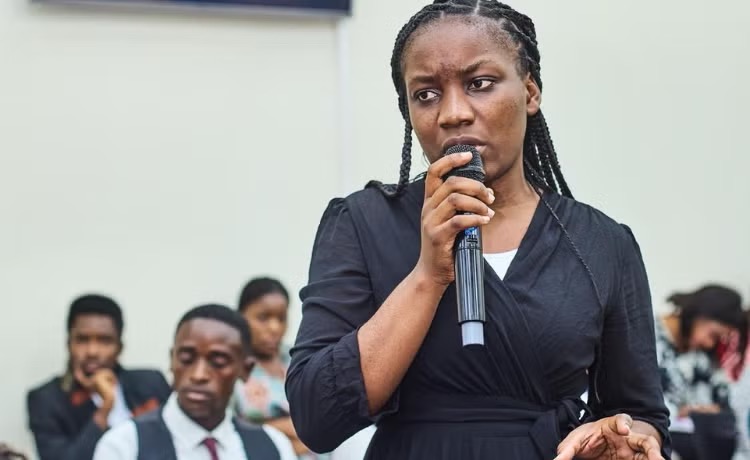
Sarah Kyabu Ntambwe grew up in a country shaped by conflict, yet her life tells a different story. Born in the Democratic Republic of the Congo just months before violence erupted, she came of age in an environment marked by insecurity and loss. Still, she chose a path of purpose. At 19, she became a television host, a youth advocate, and later the founder of Change Your World, a human and civil rights organisation that has reached tens of thousands of young people.
Her work, supported at different moments by UNFPA, has helped children affected by war reclaim their futures through skills training, family reunification, and education on the right to live free from sexual abuse and exploitation. She often reminds her community that healing requires compassion rather than retaliation. In her words, societies must protect themselves rather than repeat cycles of harm. For a country recovering from decades of turbulence, her message is both urgent and transformative.
Sarah represents what becomes possible when young people are trusted, supported, and given room to lead. Her experience is also part of a wider story unfolding across the world.
A generation ready to lead
Today, 1.8 billion young people live on our planet. The vast majority are in developing countries, many in African nations where demographic trends point to a rapidly growing youth population. Despite this numerical strength, young people are still excluded from the decision-making spaces that shape their lives. UNFPA and its partners have spent years working to change this through more deliberate and sustained investment in youth leadership.
In 2018, the United Nations launched Youth2030, a systemwide strategy aimed at improving how young people engage with UN processes and programmes. Since then, youth advocates have gained visibility and influence across intergovernmental platforms. Partnerships with youth-led organisations have grown, and spaces for youth participation have become more structured.
A milestone moment came in 2024 when UNFPA convened the ICPD Global Youth Dialogue in Cotonou, Benin. More than 400 youth delegates representing 130 countries met directly with decision-makers to articulate their priorities. They called for action on sexual and reproductive health, resilience in the face of crisis, and meaningful participation in governance.
From these discussions emerged the Cotonou Youth Action Agenda, a youth-authored advocacy document. It has already shaped global policy during negotiations for the Pact for the Future. Youth delegates successfully pushed for the inclusion of sexual and reproductive health in the youth chapter, a clear example of young advocates influencing high-level outcomes.
Partnerships that last
The UN Youth2030 Global Progress Report, recently released, names UNFPA and UNDP as the system’s top performers in advancing the strategy. For many youth leaders, this recognition is the result of long-term allyship.
Representatives from the Major Group for Children and Youth highlight the consistency of UNFPA’s engagement. Rather than short-term consultations, young people have been invited into sustained conversations. This approach, built on trust and respect for youth expertise, has helped young leaders shape programmes, policies, and public advocacy campaigns.
These gains have also been supported by funding from the governments of Canada, Denmark, Italy, the Netherlands, Slovenia, and Switzerland. Their contributions have enabled youth networks to expand, young leaders to train and mobilise, and youth-led solutions to grow in scale.
What this means for Africa
For African countries, the significance of youth leadership is profound. The continent is home to the world’s youngest population. By 2050, Africa will account for nearly half of the global increase in youth. This reality presents both an opportunity and a responsibility.
Empowering Africa’s young people is essential for democratic participation, conflict prevention, inclusive economic growth, and community resilience. Leaders like Sarah show how youth-led initiatives can break cycles of trauma, strengthen peacebuilding, and expand social protection. The success of the Cotonou Youth Action Agenda also demonstrates that African youth are shaping global policy conversations with clarity and conviction.
For governments, development partners, and civil society across Africa, the message is clear. Young people are not passive recipients of solutions. They are designers of the future. Their leadership must be valued, resourced, and integrated into national and regional development agendas.
As Youth2030 enters its next phase, a shift in mindset will be critical. Institutions must move beyond working for young people and instead work with them. Co-creation, partnership, and shared decision-making should become the norm. The promise of youth leadership lies not only in the energy and creativity young people bring, but also in the more inclusive, peaceful, and just societies they are capable of building.