
Nobel Peace Laureate Denis Mukwege Denis Mukwege Says Kinshasa–M23 Peace Deal Is “Illegitimate”
|
Getting your Trinity Audio player ready...
|
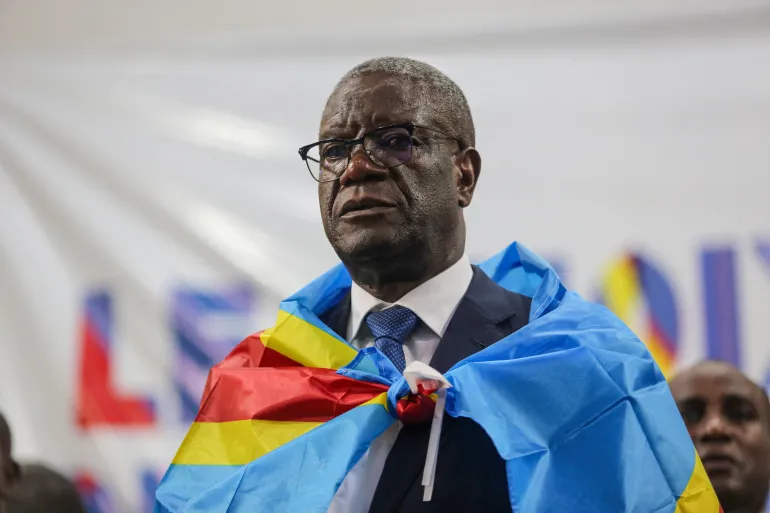
Congolese Nobel Peace Laureate Dr Denis Mukwege has issued one of the strongest rebukes yet against the peace deal being pushed between Kinshasa and M23 rebels. The agreement, driven by Washington and Doha, has been marketed as a path to stability in eastern DRC. Mukwege says it is anything but.
In a statement released over the weekend, Mukwege called the initiative “illegitimate, precarious and incapable of guaranteeing lasting peace.” His criticism goes far beyond political disagreement — it touches the core realities Africa has warned the world about for decades: mineral geopolitics, foreign extraction interests and negotiations that routinely exclude the very communities suffering on the ground.
Mukwege said the peace deal ignores the real drivers of conflict in North and South Kivu. According to him, foreign actors continue to circle the region for access to coltan, cobalt and other critical minerals powering global technology — and the deal risks becoming another arrangement built around those interests instead of Congolese lives.
He also highlighted that affected communities have been sidelined entirely, saying people in Kivu remain “deprived of their fundamental rights” while decisions shaping their future are made elsewhere. Mukwege warned that a lack of transparency and absence of clear guarantees opens the door to selective enforcement — the kind of loophole that has derailed countless agreements in the region’s recent history.
Opposition leaders in the DRC have echoed his concerns, urging President Félix Tshisekedi to publish the agreement before signing anything and calling out any plan that risks undermining the country’s sovereignty.
Mukwege, who won the 2018 Nobel Peace Prize for his work to end sexual violence in conflict, is widely regarded as one of Africa’s most respected moral voices. His rejection of the current peace deal signals a major warning to regional and international players pushing quick fixes instead of durable solutions.
What this means for Africa
DRC’s conflict is not just a national issue — it is Africa’s litmus test for whether global powers can engage the continent without extracting, exploiting or imposing. When Nobel laureates, opposition leaders and local communities are all saying the same thing, the world should listen.
Africa wants peace — but not the type negotiated in boardrooms thousands of kilometres away, without transparency, without trust and without the people who carry the consequences.
The next step for the region is clear: real peace must put Congolese communities first, not geopolitical positioning.