
Alassane Ouattara Reshapes Ivory Coast Leadership as Brother Appointed Deputy Prime Minister

|
Getting your Trinity Audio player ready...
|
Ivory Coast President Alassane Ouattara has unveiled a new government reshuffle that further consolidates his leadership following a landslide electoral victory, with a notable appointment placing his brother at the heart of national power.
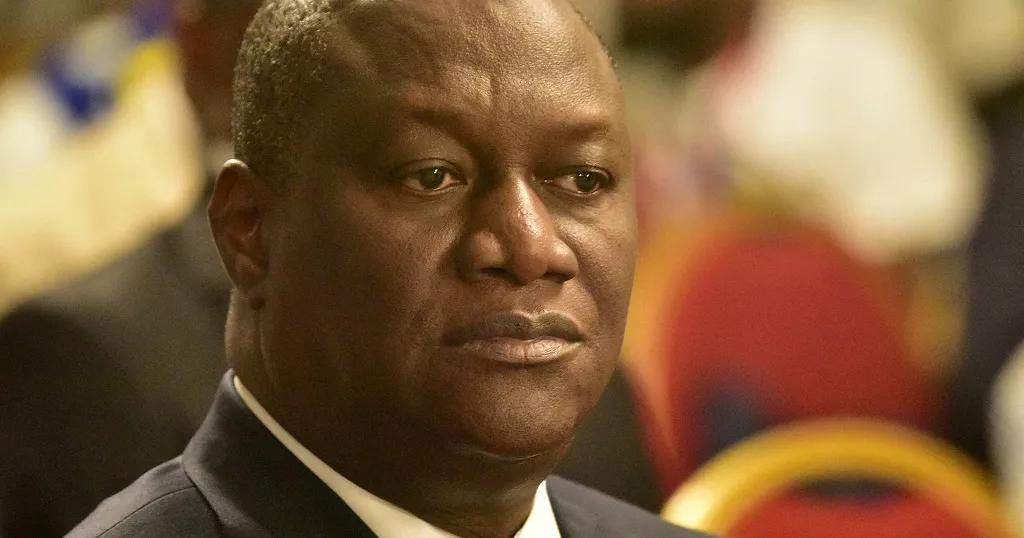
In the reshuffle, Téné Birahima Ouattara, previously serving as defence minister, has been promoted to the newly created role of Deputy Prime Minister, while retaining control of the strategically important defence portfolio. The move strengthens the president’s inner circle at a time when Ivory Coast is entering a new political phase marked by continuity, economic recalibration, and long-term governance planning.
The announcement comes just weeks after Ouattara’s ruling Rally of Houphouëtists for Democracy and Peace (RHDP) secured nearly 80 percent of parliamentary seats, and only three months after the president won a fourth term with close to 90 percent of the national vote. The results effectively position Ouattara as one of the most dominant political figures in modern Ivorian history.
Continuity at the Core of Power
Despite the reshuffle, the overall structure of government remains largely unchanged. Prime Minister Robert Beugré Mambé continues in his role, while veteran Vice President Tiemoko Meyliet Koné, now 84, retains his position, reinforcing a leadership team built on experience and institutional memory.
Former prime minister Patrick Achi transitions into the role of Speaker of Parliament, giving him significant influence over the legislative agenda and parliamentary direction.
The most symbolic shift, however, is the elevation of Ouattara’s brother. By combining defence authority with executive oversight, Téné Birahima Ouattara now occupies one of the most powerful positions in the country, overseeing security while playing a central role in policy coordination.
Economic Pressure Meets Political Stability
One of the few notable departures in the reshuffle is Kobenan Kouassi Adjoumani, who exits after more than a decade as agriculture minister. His departure comes amid mounting pressure in the cocoa sector, a critical pillar of Ivory Coast’s economy.
As the world’s largest cocoa producer, the country has been hit by falling global prices, creating significant challenges for farmers and export revenues alike. The leadership change signals the government’s intent to adapt its economic strategy as global commodity markets shift.
A Presidency Focused on Control and Continuity
With this reshuffle, Ouattara appears to be prioritizing stability, loyalty, and centralized authority over radical reform. Rather than reshaping the government, the president has chosen to reinforce trusted leadership figures, ensuring political continuity while maintaining tight control over strategic institutions.
The appointment of a family member to one of the highest offices also highlights how personal trust networks increasingly intersect with formal governance structures — a trend seen across several long-standing African presidencies.
As Ivory Coast moves deeper into Ouattara’s fourth term, the reshuffle sends a clear message: the political direction of the country will be defined less by change and more by consolidation, experience, and executive coherence.