
WHO Chief Expresses Confidence as DR Congo Battles Growing Ebola Outbreak
|
Getting your Trinity Audio player ready...
|
The head of the World Health Organization has expressed confidence that the Democratic Republic of Congo can contain its latest Ebola outbreak, despite rising infections and concerns about the disease spreading across borders.
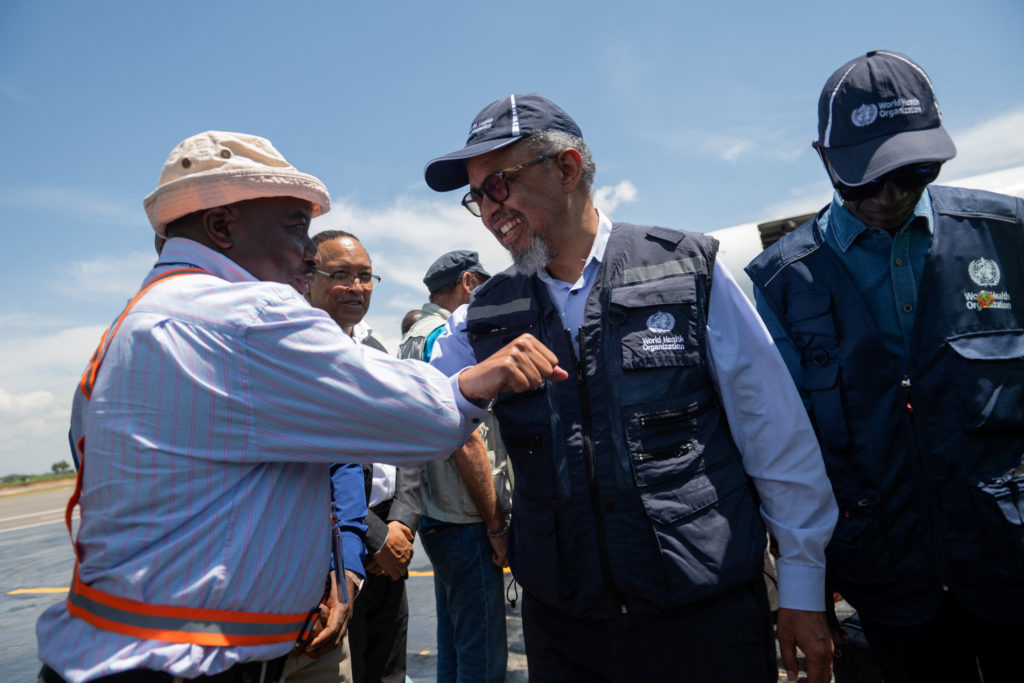
Speaking in Bunia, the epicentre of the outbreak in eastern Ituri Province, WHO Director General Tedros Adhanom Ghebreyesus said the country’s history of successfully overcoming previous Ebola outbreaks provides reason for optimism.
“The DRC has faced Ebola before, 16 times, and has ended every outbreak. This is the 17th. That history gives me real confidence,” Tedros said during a joint briefing with Congolese health officials.
International Support Needed
Health authorities are racing to contain the outbreak, which has spread across several provinces and crossed into neighbouring Uganda.
Tedros called for greater international support, noting that the WHO has so far received only about one third of the funding required for its response efforts.
He welcomed the Congolese government’s commitment of $20 million toward the response and praised ongoing coordination between national authorities and international partners.
A Challenging Ebola Strain
The current outbreak is caused by the Bundibugyo strain of the Ebola virus, a rare variant for which there is currently no licensed vaccine or specific treatment.
Despite the challenge, health experts stress that patients can survive the disease when they receive prompt medical care.
Tedros highlighted the importance of early treatment, saying several patients in Ituri have already recovered.
Community Trust Remains Critical
Public health officials continue to emphasize community engagement as a key part of controlling the outbreak.
The WHO chief warned that certain traditional burial practices involving direct contact with victims can contribute to transmission and urged communities to follow safe burial protocols.
Health authorities are also conducting clinical trials aimed at developing vaccines and treatments specifically for the Bundibugyo strain.
The Africa Centres for Disease Control and Prevention has indicated that a vaccine candidate could be ready by the end of the year.
Cases Continue to Rise
Since the outbreak was officially declared on 15 May, authorities have recorded at least 1,077 suspected cases in the Democratic Republic of Congo, including 246 deaths.
Uganda has confirmed nine infections and one death linked to the outbreak.
The WHO has cautioned that the actual scale of transmission may be significantly larger, as evidence suggests the virus was circulating before it was formally detected.
Looking Ahead
The outbreak represents a major public health challenge for the Democratic Republic of Congo and the wider region. However, the country’s extensive experience responding to Ebola, combined with growing regional cooperation and scientific research efforts, provides a foundation for optimism. As Africa continues strengthening its health systems and disease surveillance capabilities, the response to this outbreak may further advance the continent’s ability to manage future public health emergencies.