

|
Getting your Trinity Audio player ready...
|
Ghana is set to strengthen its position as one of West Africa’s emerging industrial centers following the announcement that South Korean automotive giant Hyundai plans to establish a manufacturing facility in the country.
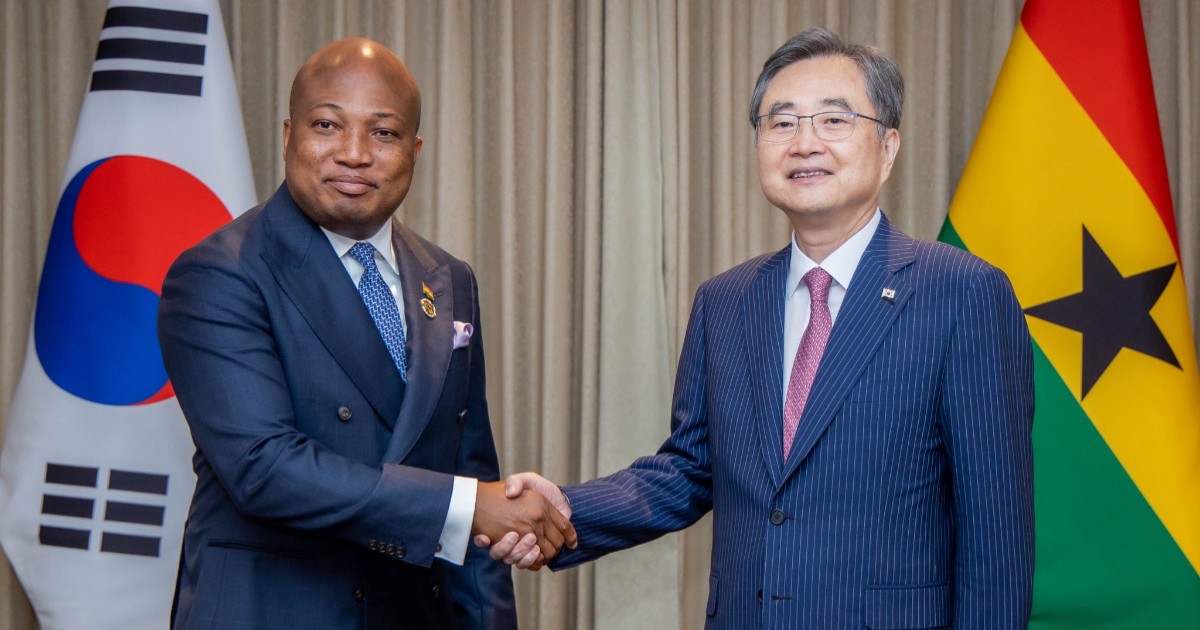
The project forms part of a broader package of agreements unveiled after the 2026 Korea-Africa Foreign Ministers’ Meeting in Seoul, where officials from Ghana and South Korea outlined new areas of cooperation spanning education, technology, agriculture, energy and industrial development.
The planned investment is expected to boost local manufacturing capacity, create employment opportunities and reinforce Ghana’s ambition to become a leading production and export hub for the West African market.
A New Chapter for Ghana’s Industrial Ambitions
The proposed Hyundai automotive plant represents one of the most significant manufacturing commitments announced for Ghana in recent years.
According to Ghanaian officials, the facility is expected to serve regional markets across West Africa while helping to expand local vehicle assembly and production capabilities.
The project aligns with Ghana’s long-term strategy of moving beyond raw material exports and building value-added industries capable of generating skilled jobs and attracting international investment.
Government leaders believe the factory could stimulate growth across multiple sectors, including logistics, engineering, component manufacturing and technical training.
Beyond Cars: Education and Technology Take Center Stage
Alongside the Hyundai investment, Ghana and South Korea announced plans to establish a new university in Ghana.
The institution is expected to support skills development in fields critical to modern economic growth, including science, technology, engineering and innovation.
Officials from both countries also discussed cooperation in artificial intelligence, renewable energy systems, critical minerals and agricultural technology.
These sectors are increasingly viewed as essential pillars of Africa’s future economic competitiveness as countries seek to build stronger industrial ecosystems and participate more actively in global supply chains.
Why South Korea Sees Opportunity in Africa
South Korea’s growing engagement with African economies reflects a broader shift in global investment patterns.
Having transformed itself from a developing nation into one of the world’s leading manufacturing and technology powers within a few decades, South Korea is increasingly viewed as a valuable development partner by African governments.
Its experience in industrial policy, infrastructure development, manufacturing expansion and technological innovation offers practical lessons for countries seeking rapid economic transformation.
For Ghana, the partnership provides access not only to capital but also to expertise, technology transfer and opportunities for workforce development.
Creating Jobs for a Young and Growing Population
Job creation remains one of the most pressing priorities for many African governments.
With millions of young people entering the labor market every year, policymakers are under increasing pressure to develop industries capable of creating sustainable employment opportunities.
Manufacturing projects such as the Hyundai facility are often seen as critical because they generate direct jobs while also supporting wider economic activity through supplier networks and supporting industries.
Analysts note that industrial investments tend to have multiplier effects that extend well beyond factory walls, benefiting transport providers, service companies, educational institutions and local communities.
Strengthening Long-Term Diplomatic Ties
The latest agreements arrive as Ghana and South Korea prepare to celebrate 50 years of diplomatic relations in 2027.
Both governments are also exploring a broader visa waiver arrangement that could further strengthen business, tourism and educational exchanges between the two nations.
The growing relationship reflects an increasing emphasis on partnerships built around industrial development, skills transfer and long-term economic cooperation rather than traditional aid models.
The Road Ahead
The success of the Hyundai manufacturing project will ultimately depend on implementation, infrastructure readiness and the ability to integrate local suppliers into the production ecosystem.
However, the announcement signals growing international confidence in Ghana’s economic potential and highlights Africa’s increasing attractiveness as a destination for industrial investment.
As African countries continue building manufacturing capacity and expanding technological expertise, partnerships like this could play an important role in accelerating economic transformation across the continent.
Africa’s industrial journey is still relatively young compared to many developed economies, but momentum is building. With a rapidly growing workforce, expanding markets and increasing international partnerships, countries such as Ghana are positioning themselves to become important players in the next generation of global manufacturing and innovation. The continent’s industrial story is still being written, and many of its most significant chapters may lie ahead.