

|
Getting your Trinity Audio player ready...
|
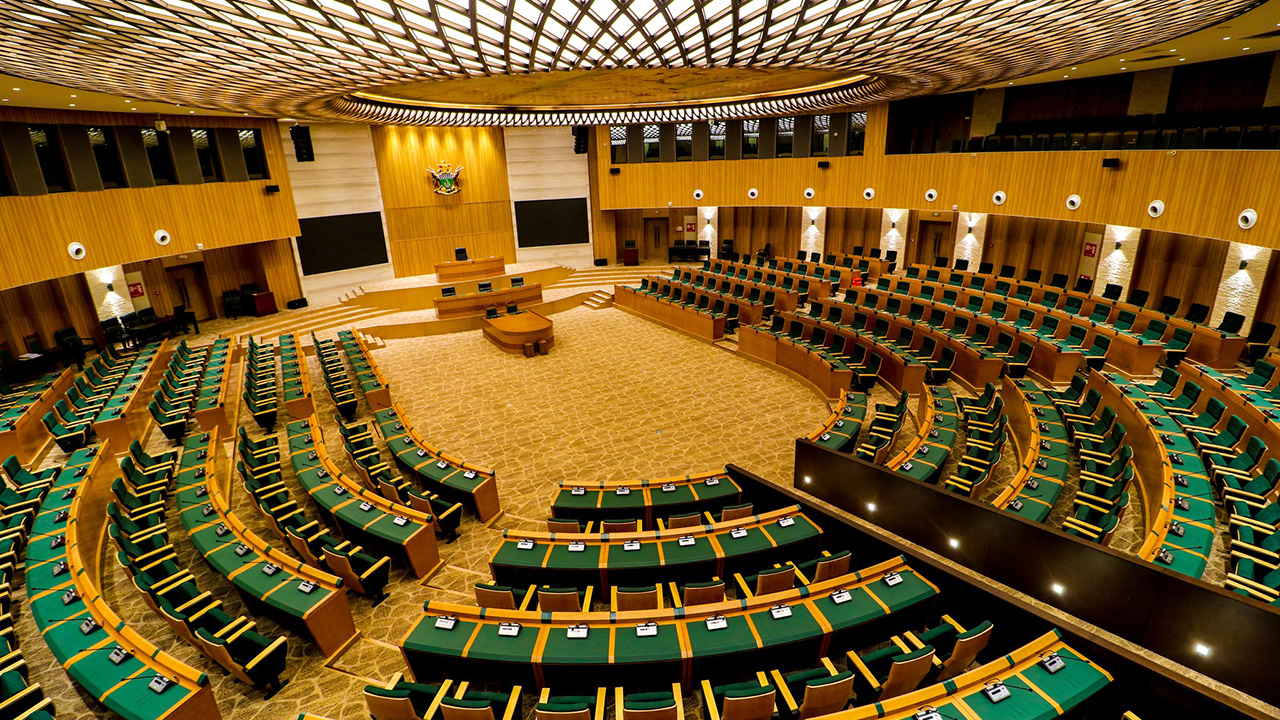
Zimbabwe’s parliament has begun debating a controversial constitutional amendment that could extend President Emmerson Mnangagwa’s time in office by two additional years, potentially keeping him in power until 2030.
The proposed legislation has triggered intense political debate across the country, with supporters describing it as a measure aimed at ensuring continuity and stability, while critics argue it could weaken democratic institutions and reduce electoral accountability.
If approved, the amendment would represent one of the most significant political changes in Zimbabwe since the adoption of the current constitution.
A Proposal Reshaping Zimbabwe’s Political Landscape
The constitutional amendment was introduced in parliament by Justice Minister Ziyambi Ziyambi and contains several far reaching provisions.
Among the most debated proposals is a plan to extend the president’s term beyond the current constitutional timetable. The bill would also eliminate direct presidential elections and instead allow parliament to appoint the country’s head of state.
Lawmakers would also see their terms extended from five years to seven years under the proposed reforms.
Government officials say the measures emerged from a nationwide consultation process that reportedly received broad public support.
Opposition Voices Raise Concerns
Opposition groups and civil society organizations have strongly challenged the proposed changes.
Critics argue that the consultation process was not conducted under conditions that allowed for open and free public participation. Some activists claim that individuals opposing the amendment faced intimidation, harassment, and arrests during the consultation period.
Several legal challenges have already been filed in Zimbabwe’s courts seeking to halt or invalidate the amendment process.
Political observers say the debate has become a broader discussion about the future of democratic governance and constitutional safeguards in Zimbabwe.
ZANU-PF’s Parliamentary Advantage
Analysts believe the amendment faces a strong possibility of passing through parliament because the ruling ZANU-PF party holds a two thirds majority in the lower house.
That parliamentary advantage gives the government significant influence over constitutional reforms and legislative initiatives.
Supporters within the ruling party argue that longer terms could allow governments to implement long term development plans without the disruptions associated with frequent election cycles.
Opponents counter that regular elections remain a critical mechanism for public accountability and democratic participation.
Mnangagwa’s Political Journey
President Emmerson Mnangagwa assumed office in 2017 following the departure of longtime leader Robert Mugabe.
He subsequently won presidential elections in 2018 and 2023, securing two five year terms under Zimbabwe’s current constitutional framework.
The constitution presently limits presidents to two elected terms.
Mnangagwa’s presidency has been marked by efforts to attract foreign investment and stabilize the economy, alongside persistent criticism from opposition groups and international observers over governance concerns, economic difficulties, and political freedoms.
What the Amendment Could Mean
If enacted, the proposed constitutional changes could fundamentally alter Zimbabwe’s political system by shifting power away from direct presidential elections and toward parliamentary selection.
Supporters believe the changes could create greater policy continuity and reduce political uncertainty.
Critics fear the reforms could concentrate political power and reduce citizens’ direct influence over leadership selection.
The outcome of the parliamentary process is likely to shape Zimbabwe’s political direction for years to come and will be closely watched across Southern Africa and beyond.
The Road Ahead for Zimbabwe
The constitutional debate arrives at a critical moment for Zimbabwe as the country seeks to address economic challenges, attract investment, and strengthen public institutions.
Regardless of the outcome, the discussions underscore the importance of constitutional governance, public participation, and institutional development in shaping the nation’s future.
Zimbabwe, like many African nations, continues to navigate the complex process of democratic and economic development decades after independence. While political disagreements remain significant, the country’s future will ultimately be shaped by its institutions, its citizens, and a younger generation increasingly engaged in defining the next chapter of Zimbabwe’s story. Progress is rarely linear, but the ongoing national conversation reflects a society actively debating its future and its place in a rapidly changing Africa.