
BRICS Trade Surpasses $1 Trillion as Russia and China Position Africa as a Future Global Growth Engine
|
Getting your Trinity Audio player ready...
|
Leaders at the 29th St. Petersburg International Economic Forum said the balance of global economic power is increasingly shifting toward emerging markets, with Africa expected to play a major role in future growth.
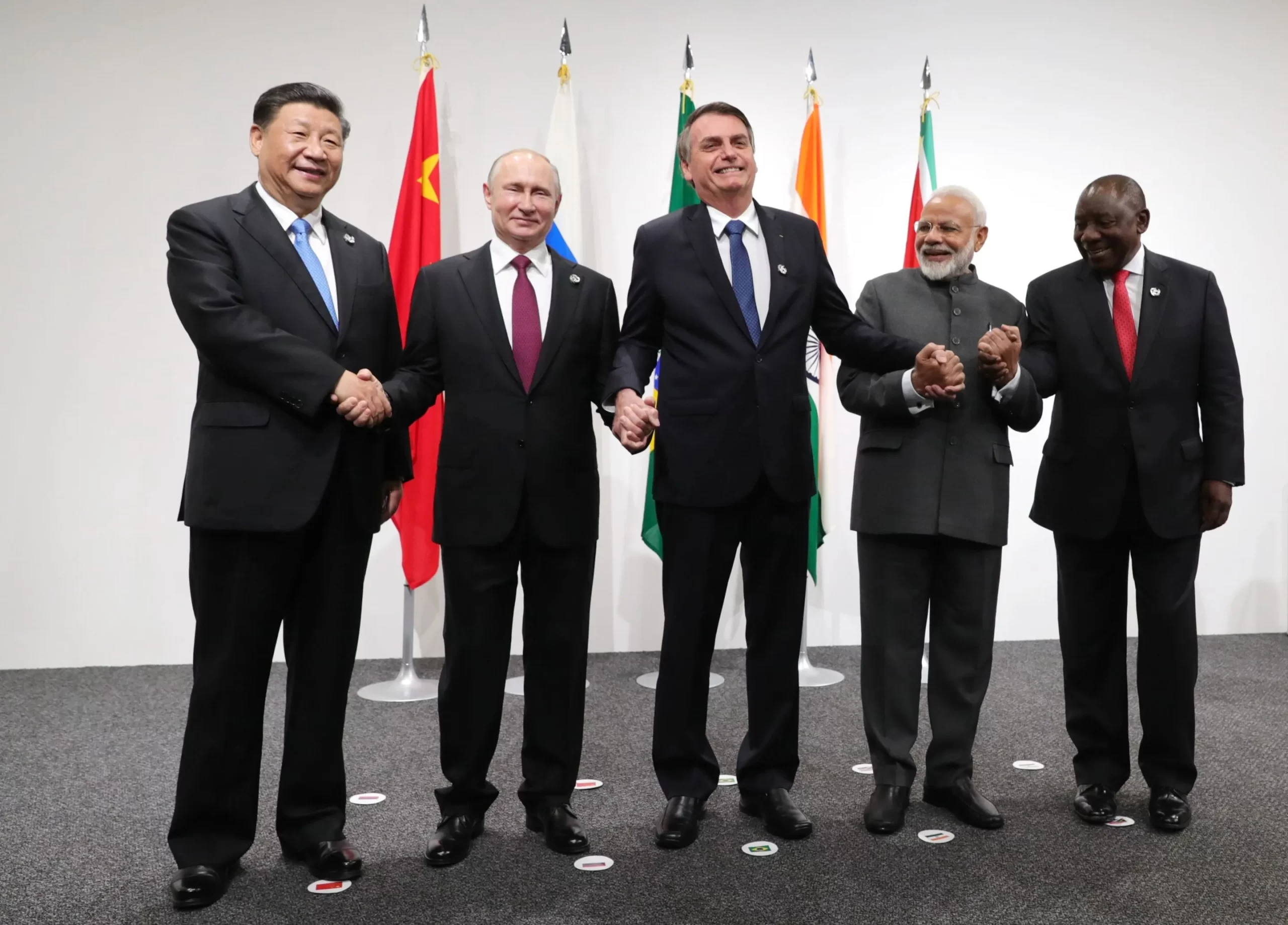
The discussions came as BRICS trade surpassed $1 trillion and member countries expanded their influence in global trade, technology, and investment.
Russian President Vladimir Putin told delegates that BRICS nations now account for nearly 40% of global gross domestic product measured by purchasing power parity and generated 49% of global economic growth over the past five years.
BRICS Expands Economic Influence
Speaking during the forum’s plenary session, Putin said the global trading system and financial architecture are already undergoing significant changes.
“The focus of global trade, and with it the financial system, will also shift. In fact, it is already shifting,” Putin said.
According to the Russian president, BRICS countries now account for almost a quarter of global exports. He added that trade among BRICS members has exceeded $1 trillion, highlighting the bloc’s growing economic significance.
The BRICS grouping includes Brazil, Russia, India, China, South Africa and several newer members that have joined the organization in recent years.
High Technology Growth Accelerates
Putin said BRICS nations now generate more than one third of global high technology exports.
He pointed to China’s leadership in artificial intelligence patents, India’s strength in software development, and Russia’s growing capabilities in digital services, online platforms, and nuclear energy technology.
The comments reflected broader efforts by emerging economies to increase their influence in industries traditionally dominated by advanced Western economies.
Africa Positioned as a Future Growth Engine
While discussions focused heavily on BRICS expansion, African leaders emphasized the continent’s growing economic potential.
Tanzanian President Samia Suluhu Hassan said demographic trends, expanding consumer markets, and regional economic integration are positioning Africa as one of the world’s most important growth regions.
“By 2050, one in every four people on this planet will be African. Nine of the world’s twenty fastest growing economies will be located on the African continent,” Hassan said.
She noted that Africa’s middle class is projected to exceed one billion people and highlighted the African Continental Free Trade Area as a major driver of future economic growth.
AfCFTA and Agenda 2063 Drive Ambitions
Hassan said Africa is increasingly shaping its own development priorities through initiatives such as the African Union’s Agenda 2063.
She argued that the continent should no longer be viewed solely as a destination for foreign investment but as an emerging economic force helping shape global trade and development.
The Tanzanian president also highlighted her country’s recent economic performance, revealing that Tanzania attracted $12 billion in foreign direct investment during 2025.
She credited reforms including a one stop investment centre and 24 hour online business registration systems for helping attract investors.
Growing Cooperation Across the Global South
The forum also showcased expanding partnerships among developing economies.
On the sidelines of SPIEF, Putin and Uzbek President Shavkat Mirziyoyev launched construction of a nuclear power plant in Uzbekistan. Uzbekistan became a BRICS partner state in 2025.
Mirziyoyev said joint projects between Russia and Uzbekistan now exceed $50 billion and cover sectors including energy, manufacturing, agriculture, logistics, and technology.
A New Chapter for Africa’s Economic Future
The conversations at SPIEF reflect a broader shift taking place across the global economy. Emerging markets are becoming more influential in trade, technology, investment, and development. For Africa, the opportunity extends beyond participating in global growth to helping drive it.
The continent still faces significant challenges, but its young population, expanding middle class, growing digital economy, and initiatives such as AfCFTA are creating new possibilities. Africa’s modern development journey is still relatively young, and while progress will not happen overnight, the foundations for long term growth continue to strengthen. The coming decades may offer one of the most important opportunities in Africa’s history to shape its own economic future and play a larger role in the global economy.