
Ousmane Sonko Re-Elected as PASTEF Party Chief Amid Deepening Rift With Senegal’s President
|
Getting your Trinity Audio player ready...
|
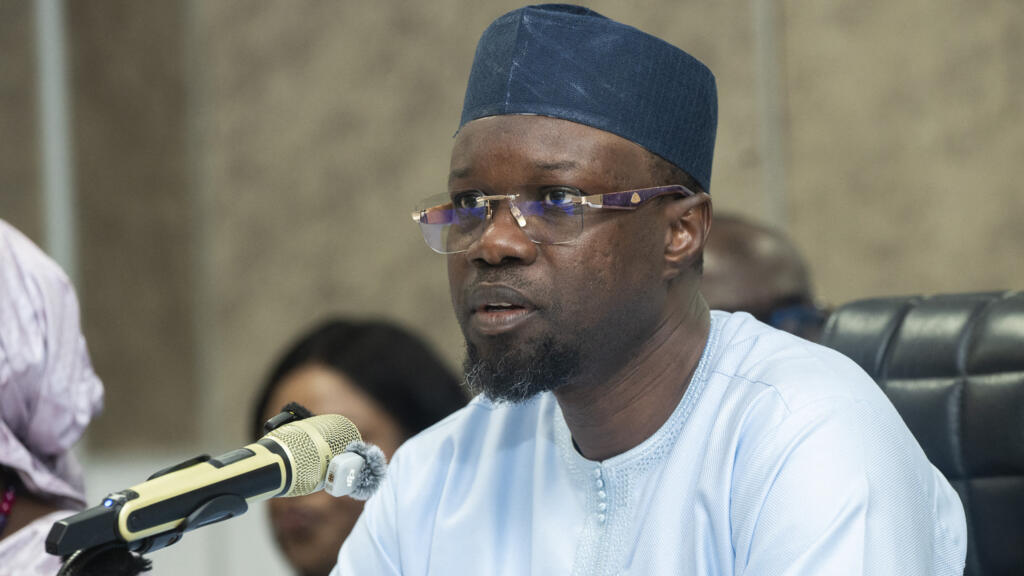
DAKAR, Senegal — Ousmane Sonko has been re-elected as leader of Senegal’s ruling Pan-Africanist PASTEF party, strengthening his political influence at a time of growing tensions with President Bassirou Diomaye Faye.
Sonko, who currently serves as Speaker of Senegal’s National Assembly, secured unanimous support from 583 delegates during a party congress held in Diamniadio outside Dakar on Saturday.
The victory comes weeks after President Faye dismissed Sonko from his position as prime minister, marking a dramatic escalation in a political relationship that once helped bring the pair to power.
Faye won Senegal’s 2024 presidential election after Sonko, one of the country’s most popular opposition figures, was barred from contesting the vote. Sonko subsequently endorsed Faye and later served as his prime minister.
However, relations between the two leaders have steadily deteriorated.
In July 2025, Sonko publicly criticized what he described as a problem of authority within the government. Political tensions continued to rise before reaching a breaking point on May 22, when President Faye removed Sonko from the premiership.
Just four days later, Sonko was elected Speaker of the National Assembly, ensuring he remained one of the most influential figures in Senegalese politics.
Speaking after his re-election as party chief, Sonko described PASTEF as the voice of a democratic, popular and sovereign revolution.
“Our voice is that of a democratic revolution, popular and sovereign,” he told supporters.
He also vowed that attempts to undermine the movement would not succeed because Senegalese citizens would continue to defend the country’s future.
President Faye has meanwhile called for national unity and restraint.
In a recent speech, he warned against allowing political disputes to divide the country, stating that no disagreement should be allowed to tear apart the nation.
The disagreement between the two leaders extends beyond political leadership. They have also taken different positions on how Senegal should manage its economic challenges.
Faye has indicated a willingness to engage with the International Monetary Fund regarding a potential new loan programme, while Sonko has advocated a more sovereign approach to addressing the country’s debt burden.
The dispute has created uncertainty within PASTEF despite the party retaining the largest bloc in parliament.
Looking ahead, local elections are scheduled for 2027, followed by presidential elections in 2029. While PASTEF’s parliamentary majority gives it significant influence, constitutional provisions could eventually allow President Faye to dissolve parliament and seek a fresh mandate.
Political analysts will be closely watching whether the growing rivalry evolves into a direct contest for influence over Senegal’s political future.
As Senegal navigates this period of political uncertainty, the country’s democratic institutions continue to face important tests. Like many African nations, Senegal remains on a relatively young development journey, with its political system still evolving and adapting. Challenges are inevitable, but so too are opportunities. The choices made by today’s leaders and citizens will help shape the next chapter of a country whose story, like much of Africa’s, is still being written with ambition, resilience, and hope.