
US and Saudi Arabia Sign Nuclear Cooperation Agreement Allowing Path to Civilian Uranium Enrichment

|
Getting your Trinity Audio player ready...
|
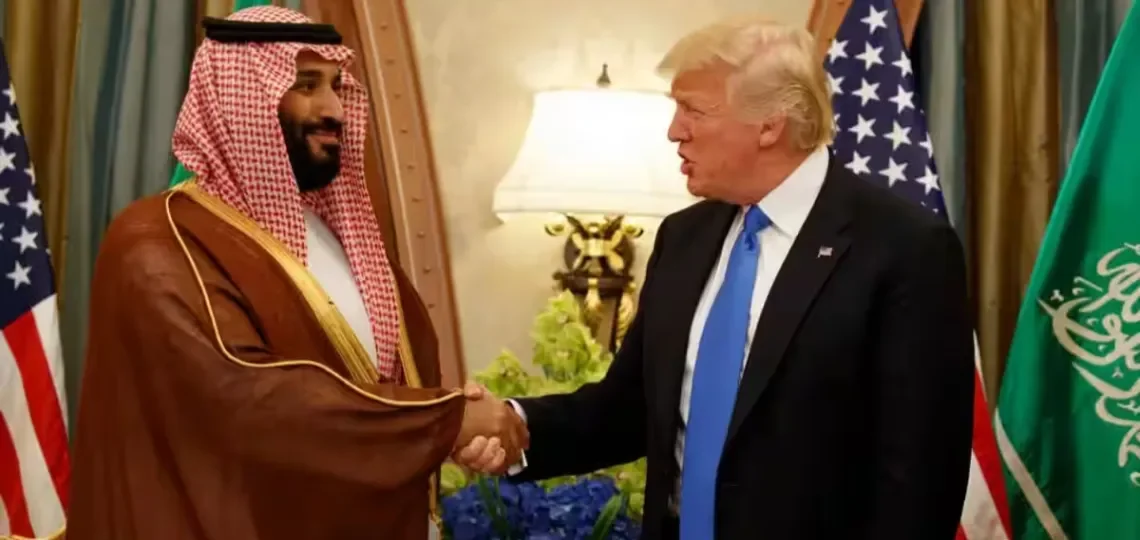
The United States and Saudi Arabia have signed a new civil nuclear cooperation agreement that could pave the way for the Kingdom to develop uranium enrichment capabilities as part of its civilian nuclear energy program.
The agreement was formally signed on Wednesday by US Energy Secretary Chris Wright and Saudi Energy Minister Prince Abdulaziz bin Salman. The deal includes a so called “123 Agreement” alongside a bilateral safeguards agreement, creating the legal framework for expanded nuclear cooperation between the two countries.
While the US administration released limited details, the agreement is expected to support the development of a uranium enrichment facility in Saudi Arabia following a joint US Saudi study, according to a person familiar with the matter.
Speaking after the signing, Wright said the agreements strengthen commercial ties between Washington and Riyadh while maintaining high standards of nuclear safety and nonproliferation.
“These agreements reflect our two nations’ shared commitment to strengthening US Saudi commercial relations, delivering prosperity at home and security to our allies abroad,” Wright said.
US Secretary of State Marco Rubio also defended the agreement, rejecting concerns that it could contribute to nuclear weapons proliferation.
“The United States is not going to reach any agreement with any country in the world that leads to the risk of proliferation,” Rubio told reporters during a visit to the Philippines.
However, the agreement reportedly does not include the International Atomic Energy Agency’s Additional Protocol, which provides enhanced international inspections and monitoring of nuclear activities. The deal is expected to remain in force for 30 years and will now be submitted to the US Congress for review, where lawmakers could challenge its approval.
Saudi Arabia’s Ministry of Energy said the agreement supports the Kingdom’s strategy to diversify its energy sources, advance modern technologies and expand investment and cooperation with the United States.
The announcement comes amid heightened geopolitical tensions in the Middle East following recent military confrontations involving the United States, Israel and Iran. Iran has consistently maintained that its uranium enrichment program is intended for peaceful civilian purposes.
Experts Raise Concerns Over Uranium Enrichment
The agreement has generated debate among nuclear security experts, many of whom argue that allowing Saudi Arabia to enrich uranium represents a significant shift in longstanding US nonproliferation policy.
Alexander Bollfrass, a nuclear expert at the International Institute for Strategic Studies in London, described the agreement as “a revolutionary new approach” because it does not reportedly require Saudi Arabia to adopt the highest level of internationally monitored safeguards before receiving sensitive nuclear technology.
Nonproliferation experts note that uranium enrichment alone does not produce a nuclear weapon. However, enrichment technology is considered one of the key capabilities that could theoretically support a weapons program if combined with additional technologies and political decisions.
Saudi Crown Prince Mohammed bin Salman has previously indicated that Saudi Arabia would seek nuclear weapons if Iran were to successfully develop one, a statement that has remained central to international discussions surrounding the Kingdom’s nuclear ambitions.
Economic and Strategic Implications
Beyond security concerns, the agreement could create significant commercial opportunities for American companies.
US nuclear technology firm Westinghouse is widely expected to benefit if Saudi Arabia proceeds with plans to construct new nuclear power plants using American reactor technology.
Representative Brad Sherman, a Democratic lawmaker from California, questioned the agreement during a House Foreign Affairs Committee hearing, arguing that it presents a contradiction in US policy toward nuclear enrichment in the Middle East.
The agreement reflects a broader strategic partnership between Washington and Riyadh that extends beyond energy into investment, defense and regional security.
Saudi Arabia has identified nuclear energy as one of several sectors supporting its long term economic diversification strategy under Vision 2030, reducing reliance on oil while expanding domestic electricity generation.
At The Voice of Africa, developments in global energy policy matter far beyond the countries signing the agreements. Africa possesses some of the world’s largest uranium reserves and growing demand for clean energy technologies presents new opportunities for investment, industrialization and regional partnerships. As global competition for energy security intensifies, African nations have an opportunity to move beyond exporting raw resources and play a larger role in the future of the world’s energy economy.
US, United States, Saudi Arabia, US Saudi Arabia, US Saudi nuclear agreement, Saudi nuclear program, uranium enrichment, civilian nuclear energy, nuclear cooperation, 123 Agreement, Chris Wright, Abdulaziz bin Salman, Marco Rubio, Donald Trump, Saudi Energy Ministry, US Energy Department, nuclear power, nuclear technology, uranium, nuclear fuel, nuclear safety, nuclear nonproliferation, International Atomic Energy Agency, IAEA, Additional Protocol, nuclear inspections, Middle East, Middle East politics, energy security, global energy, Saudi Vision 2030, Vision 2030, commercial nuclear power, Westinghouse, AP1000 reactor, nuclear reactors, US Congress, nuclear policy, Iran, Iran nuclear program, Saudi Iran relations, geopolitical tensions, energy investment, clean energy, electricity generation, strategic partnership, US Saudi relations, Riyadh, Washington, nuclear infrastructure, energy diversification, oil economy, renewable energy, nuclear development, global security, international relations, world news, breaking news, AP News, Africanews, uranium reserves, Africa uranium, African mining, Africa energy, African energy sector, clean energy Africa, energy transition, investment Africa, strategic minerals, global uranium market, nuclear economics, international business, foreign investment, diplomacy, energy policy, nuclear experts, Alexander Bollfrass, Brad Sherman, Defense Priorities, nuclear proliferation, commercial partnership, energy cooperation, Middle East security, world politics, energy markets, uranium mining, nuclear governance, global affairs, energy future, industrial development, Africa development, African opportunity, TVOA News, The Voice of Africa, Africa economy, Africa business, Africa future, global trade, investment opportunities, economic development, energy innovation, geopolitical analysis