
Ghana Africa Ocean Institute Positions Cape Coast as New Hub for Blue Economy Research
|
Getting your Trinity Audio player ready...
|
Ghana has launched a new Africa Ocean Institute at the University of Cape Coast, creating a continental research platform focused on ocean science, marine governance, coastal resilience and the sustainable development of Africa’s blue economy.
The institute is designed to bring researchers, policymakers, industry actors, development partners and coastal communities together around practical solutions to some of the most pressing challenges facing Africa’s marine environment.
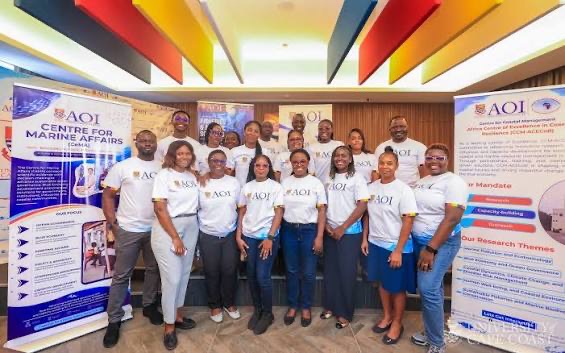
The Africa Ocean Institute brings together three areas of existing expertise at UCC: the Centre for Coastal Management, the Department of Fisheries and Aquatic Sciences and the Centre for Marine Affairs. That structure gives the new institute a broad mandate extending from scientific research to policy, governance, fisheries and community-level coastal development.
Africa’s coastal environments face growing pressure from climate change, illegal fishing, pollution, biodiversity loss and maritime insecurity. At the same time, the continent’s oceans offer significant opportunities for employment, food security, economic growth and climate resilience. The institute has been established around that dual reality.
Rather than treating ocean protection and economic development as competing priorities, UCC says it intends to explore how marine resources can be managed sustainably while supporting livelihoods and national development. The university’s location gives the initiative particular relevance. Cape Coast sits directly on Ghana’s coastline and is part of a region where fishing, tourism, coastal settlements and marine ecosystems are closely connected.
That proximity places researchers near many of the communities and environmental systems their work is intended to support. The launch also reflects the growing policy importance of the blue economy across Africa. African countries possess extensive coastlines, fisheries, ports and marine resources, but many continue to struggle with illegal fishing, declining fish stocks, coastal erosion and limited local capture of the economic value generated by maritime industries. Research institutions can play an important role in changing that.
By connecting scientific evidence with public policy, universities can help governments make better decisions about fisheries management, marine conservation, infrastructure and coastal adaptation. The Africa Ocean Institute is also expected to strengthen training and capacity development, an important consideration in a field where African countries often depend heavily on external technical expertise.
Financial and institutional support for the launch came from partners including the Japan International Cooperation Agency, Blue Ventures, Prudential Bank and Zenith Bank. The long-term test will be whether the institute becomes more than an academic centre and develops into a platform capable of influencing policy, supporting coastal communities and producing research that changes how African marine resources are governed.
For Ghana, the opportunity is significant.
A stronger domestic knowledge base around oceans and coastal management could support everything from fisheries policy to climate adaptation and maritime development.
For Africa, the wider message is equally important. The continent’s oceans are frequently discussed in terms of what is being lost through illegal fishing, pollution or climate change. The Africa Ocean Institute offers a different starting point: what Africa can build through knowledge, science and better governance. African institutions remain relatively young in many specialised fields, but that also means the continent still has the opportunity to shape them around its own priorities. If Ghana can turn ocean research into stronger policy, better livelihoods and more sustainable use of marine resources, Cape Coast could become an important part of Africa’s emerging blue economy story.
Ghana Africa Ocean Institute, University of Cape Coast, Africa Ocean Institute, Ghana blue economy, Ghana ocean research, Ghana marine governance, Ghana coastal resilience, sustainable blue economy Africa, Ghana marine science, Africa ocean science, University of Cape Coast ocean institute, Ghana coastal management, Ghana fisheries research, Ghana marine affairs, Ghana environmental research, Africa blue economy, African ocean governance, Ghana sustainable development, Ghana climate resilience, Ghana coastal communities, Ghana maritime security, Ghana illegal fishing, Ghana biodiversity loss, Ghana ocean pollution, Ghana marine conservation, Ghana ocean policy, Ghana ocean innovation, Ghana research institute, Ghana coastal ecosystems, Ghana ocean economy, Ghana fisheries sector, Ghana marine education, Ghana ocean capacity building, Ghana science policy, Ghana research partnerships, Ghana sustainable oceans, Ghana climate adaptation, Ghana marine resources, Ghana coastal development, Ghana ocean sustainability, Africa coastal resilience, Africa marine science, Africa ocean research, Africa blue economy jobs, Africa marine governance, Africa fisheries sustainability, Africa coastal communities, Africa ocean innovation, Africa ocean policy, Africa climate resilience, Africa marine conservation, Africa coastal development, Africa ocean economy, Ghana university innovation, UCC blue economy, UCC marine research, UCC coastal research, UCC fisheries, UCC Centre for Coastal Management, UCC Centre for Marine Affairs, UCC Department of Fisheries, Ghana higher education innovation, Ghana science development, Ghana research news, Ghana positive news, Ghana development 2026, Ghana ocean institute 2026, Africa Ocean Institute launch, Ghana marine research hub, Ghana blue economy solutions, Ghana ocean governance 2026, Ghana coastal policy, Ghana ocean partnerships, JICA Ghana ocean research, Blue Ventures Ghana, Prudential Bank Ghana, Zenith Bank Ghana, Ghana ocean finance, Ghana marine technology, Ghana sustainable fisheries, Ghana coastal livelihoods, Ghana marine jobs, Ghana ocean research hub, Africa sustainable oceans, Africa marine development, African universities research, African blue economy strategy, Ghana environmental innovation, Ghana ocean leadership, Ghana science leadership, Africa ocean leadership, Africa marine policy, Ghana coastal climate action, Ghana ocean resilience, Ghana marine biodiversity, Ghana sustainable fisheries research, Africa Ocean Institute Ghana, UCC Ocean Institute 2026, TVOA Ghana, TVOA Africa development