
Burkina Faso Pineapple Farming Turns Harsh Sahel Land Into New Agribusiness Opportunity

|
Getting your Trinity Audio player ready...
|
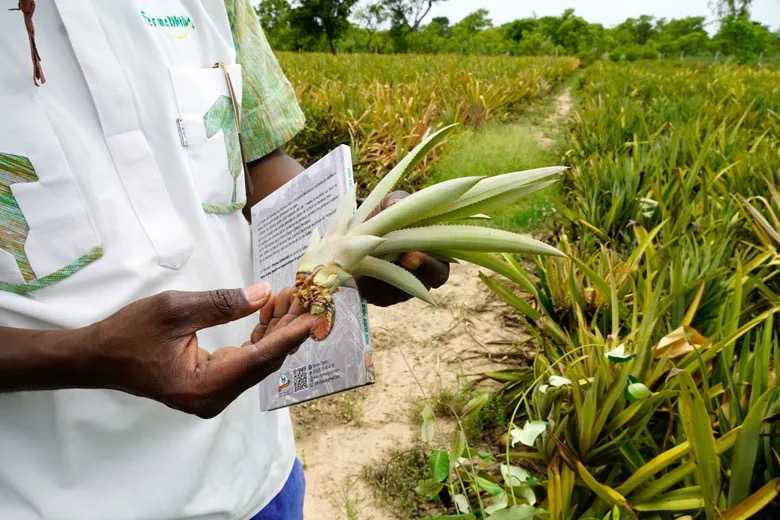
Farmers in Burkina Faso are challenging assumptions about what can be grown in the Sahel, with pineapple cultivation expanding around Bobo-Dioulasso despite sandy soils, difficult climatic conditions and a crop traditionally associated with wetter environments.
Farmer Oumarou Compaoré began cultivating pineapples outside the western city in 2018. The experiment has since developed into a wider local farming movement, with more than 100 farmers estimated to have entered production.
By November, approximately 100 hectares of land in the administrative region surrounding Compaoré’s farm had been converted into pineapple fields. The development is significant in a country where cotton, maize and sorghum are more familiar agricultural products.
Compaoré’s initiative was partly inspired by supply disruptions during the COVID-19 pandemic, when border closures highlighted Burkina Faso’s reliance on neighbouring countries for some foods. The experience helped strengthen his interest in producing more crops locally.
Pineapples can potentially generate stronger returns than some traditional crops because of steady consumer demand and higher market value.
That economic potential has encouraged other farmers to experiment with production. Training is also becoming part of the model. Agricultural specialists working with the farms are helping new producers learn cultivation techniques suited to local conditions.
Growing pineapples in the Sahel is not straightforward. The crop requires reliable access to water and takes a relatively long time to mature. Irrigation costs can therefore create a significant barrier, particularly for small-scale farmers.
Climate conditions and the quality of the soil also require producers to adapt their methods. The emerging industry nevertheless demonstrates what agricultural diversification can look like in practice.
Food sovereignty has become a prominent policy theme in Burkina Faso, with authorities placing greater emphasis on domestic food production and processing. The government has also pursued measures aimed at reducing reliance on certain food imports and expanding local processing capacity.
That strategy is especially important because Burkina Faso continues to face serious food insecurity alongside conflict and displacement. Millions of people remain affected by shortages and instability, meaning innovative agriculture alone cannot resolve the country’s food challenges.
But expanding the range of crops produced locally can strengthen rural incomes and reduce some forms of import dependence.
For The Voice of Africa, Burkina Faso’s pineapple farms offer a useful reminder that African agricultural development is not only about producing more of the crops farmers have always grown. It is also about experimentation, entrepreneurship and adapting production to changing economic and climatic realities. The Sahel is usually discussed through drought, insecurity and hunger. Those challenges remain real, but they are not the whole story. Farmers finding ways to create value from difficult land are also part of the region’s future.