
Kenya Aviation Strike Ends as East Africa’s Main Air Hub Restores Operations

|
Getting your Trinity Audio player ready...
|
Kenya’s aviation workers have ended a strike that disrupted flights at the country’s main international airport and caused delays across regional routes, allowing authorities to begin restoring normal operations at one of East Africa’s most important transport hubs.
The industrial action affected Jomo Kenyatta International Airport in Nairobi and other airports, with air traffic controllers among the workers participating.
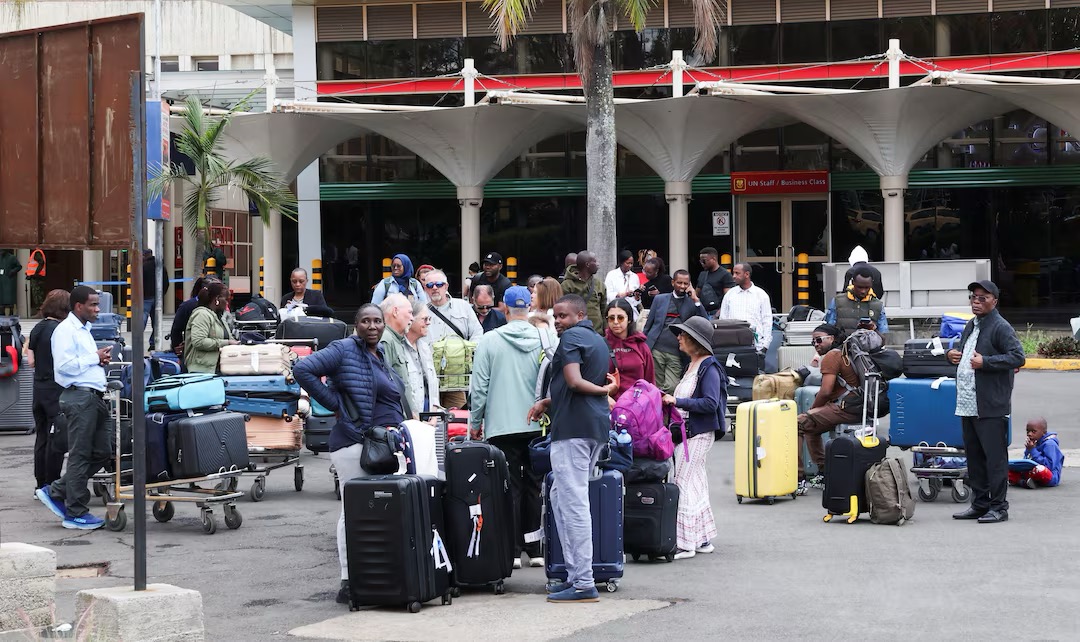
Flights were delayed or cancelled through Sunday and Monday, affecting thousands of passengers and creating knock-on disruption for airlines operating across the region. The strike was linked to several unresolved workplace grievances.
The Kenya Aviation Workers’ Union had raised concerns including a stalled collective bargaining agreement involving the Kenya Civil Aviation Authority and what it described as insufficient cooperation from other aviation sector institutions.
The disruption demonstrated how quickly labour action at a major airport can affect an entire regional travel network. Nairobi serves as a significant aviation hub connecting East African capitals with destinations elsewhere on the continent and internationally.
RwandAir was among the airlines forced to cancel flights because of air traffic control problems in Nairobi during the disruption. Passengers also reported lengthy waits and uncertainty as airlines attempted to adjust schedules.
The end of the strike means aviation authorities and airlines can now focus on clearing delayed flights and repositioning aircraft and crews.
Normalising a disrupted aviation network can take time even after industrial action ends because one cancellation can affect later flights, passengers and aircraft schedules. The agreement also shifts attention back towards the underlying labour issues.
Ending a strike does not necessarily mean every dispute between workers, regulators and employers has been permanently resolved. Sustainable stability will depend on whether negotiations address the collective bargaining and workplace concerns that prompted the industrial action.
For Kenya, reliable aviation is economically important. Air transport supports tourism, international business, cargo movement, diplomatic travel and regional commerce. Disruption at JKIA therefore carries consequences beyond the airport itself.
The incident also highlights the importance of labour relations in infrastructure sectors where interruptions can rapidly affect national and regional economies.
For The Voice of Africa, the constructive development is that the immediate disruption has ended through engagement rather than prolonged confrontation. Africa’s transport systems are becoming more interconnected, which means labour disputes in one national hub increasingly affect travellers and businesses across borders. Strong institutions must therefore protect both workers’ rights and the reliability of essential services. Kenya now has an opportunity to move beyond restoring flights and address the conditions necessary to keep one of East Africa’s most important gateways operating predictably.