

|
Getting your Trinity Audio player ready...
|
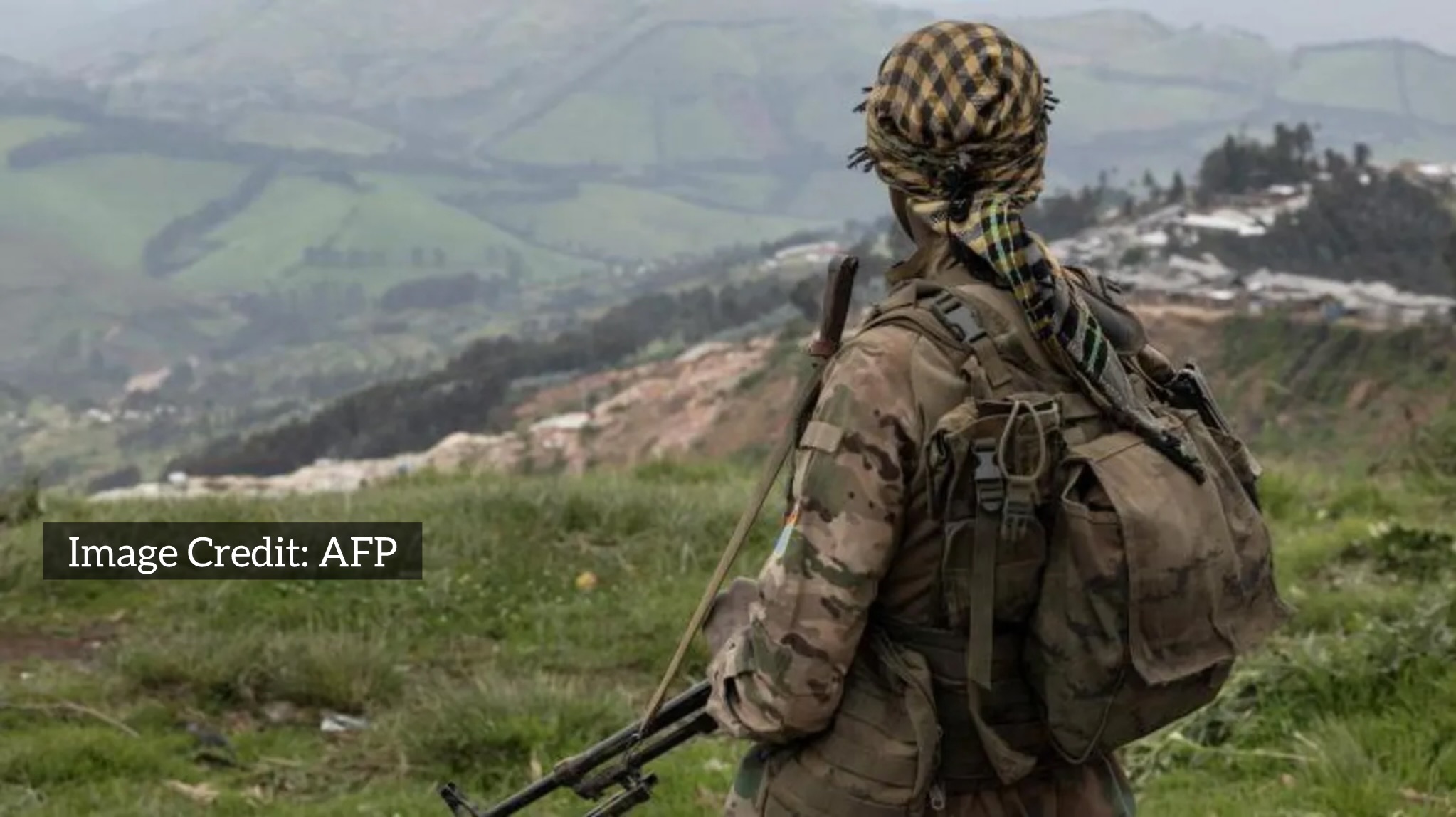
A recent investigation has shed light on a devastating wave of violence in eastern Democratic Republic of Congo (DRC), where the M23 rebel group is accused of killing at least 140 civilians in July, despite ongoing international efforts to bring peace to the region.
According to a report released by Human Rights Watch (HRW), the killings occurred in the Rutshuru territory near Virunga National Park between 10 and 30 July 2025. Witnesses described brutal executions, many involving machetes and gunfire, with entire families, including women and children, among the victims.
Widespread Atrocities in Rutshuru
Testimonies from residents and medical workers indicate that M23 fighters blocked key roads to trap villagers before carrying out mass executions in at least 14 villages and farming communities. Survivors recounted harrowing scenes: some were forced to watch their relatives being killed, while others were rounded up near riverbanks and shot at close range.
One man said he lost five family members in Katanga, while a woman recounted how her husband was murdered with a machete as she and dozens of others were lined up near a river. According to reports, the rebels also ordered residents to bury victims hastily or leave their bodies unburied, denying families proper funerals.
Rising Death Toll and International Reactions
While HRW confirmed at least 140 deaths, the organization warned the figure could be much higher, with UN estimates from earlier this month putting the toll at over 300 civilians killed during the same period.
The massacre took place against the backdrop of a fragile peace process facilitated by the United States and Qatar, aimed at resolving years of conflict in the mineral-rich east. However, renewed fighting between M23 and Congolese government forces has stalled the process, with the rebels capturing significant territory, including parts of the provincial capital, Goma.
Allegations of Foreign Involvement
The HRW report also cites multiple sources, including military personnel and UN staff, alleging that Rwanda’s Defence Force (RDF) provided support to M23 during the offensive. Rwanda has strongly denied similar accusations made by the United Nations, describing them as “baseless” and warning they could undermine ongoing peace efforts.
M23, a group with historical links to the Tutsi ethnic community, has repeatedly denied responsibility for the recent killings, instead blaming rival armed factions such as the Hutu-dominated FDLR, a militia formed by perpetrators of the 1994 Rwandan genocide.
Peace Process in Jeopardy
Despite signing a ceasefire agreement in Qatar last month, M23 recently withdrew from further negotiations, accusing the Congolese government of failing to uphold its commitments. The group has since indicated it may send a technical team to Doha to discuss ways to implement the truce. Meanwhile, Congolese authorities have accused M23 of breaching the ceasefire by continuing attacks in key areas.
Call for International Accountability
Human Rights Watch has urged the United Nations Security Council, the European Union, and partner governments to condemn the atrocities, strengthen sanctions against those responsible, and ensure that commanders implicated in the killings face justice.
The ongoing violence has displaced hundreds of thousands of civilians, deepening an already dire humanitarian crisis in eastern DRC. Observers warn that without urgent action, the region risks sliding into even greater instability, undermining both local and international peace initiatives.
Source: BBC Africa