
Five ways UNFPA’s humanitarian work is supporting women and girls across Africa’s biggest crises
By Maxine Ansah

|
Getting your Trinity Audio player ready...
|
UNITED NATIONS, New York – A new humanitarian appeal released by UNFPA, the United Nations sexual and reproductive health agency, is calling for US$1 billion in urgent funding for 2026 to support women and girls caught in some of the world’s worst crises. Many of those most affected are in Africa, where conflict, displacement and climate shocks continue to place women and girls at extreme risk.
UNFPA’s 2026 Humanitarian Action Overview aims to reach more than 34 million women, girls and young people in 42 countries. Half of the requested funding is focused on five major crises, several of them on the African continent, including Sudan and the Democratic Republic of the Congo, alongside Afghanistan, the Occupied Palestinian Territory and Yemen.
Disruptions and closures across humanitarian services in 2025 have had immediate and severe consequences. In many settings, maternal and reproductive health services have deteriorated to the point where women are giving birth without skilled care, while gender-based violence has increased as protection services shut down.
Despite record levels of need, humanitarian agencies are requesting less funding than in previous years, reflecting the scale of cuts across the aid sector. As 2026 approaches, women and girls face growing danger in emergencies the global response system is struggling to keep pace with.
Below are five critical ways UNFPA is sustaining life-saving support, beginning with Africa’s most affected crises.
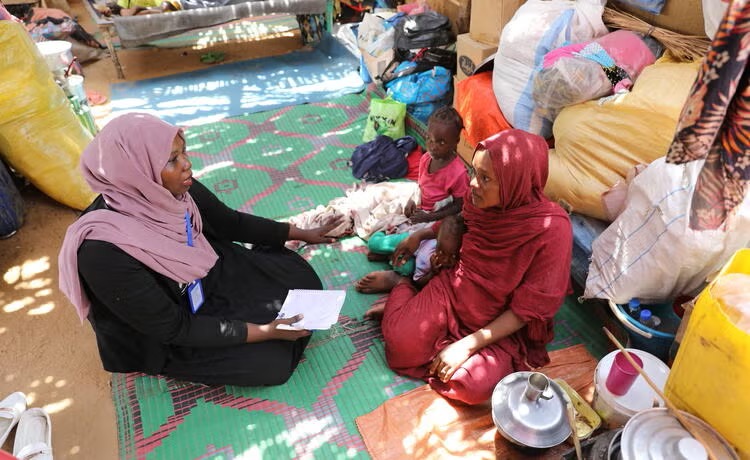
1. Providing safe spaces for survivors of violence in Sudan
In Sudan, conflict-related sexual violence has nearly tripled since 2024 as protection systems have collapsed. Thousands of women and girls have been forced to flee violence with little access to care.
Salam, 19, was assaulted by armed men while escaping fighting in El Fasher. She later received medical treatment and psychosocial support at a UNFPA-supported safe space in Tawila.
UNFPA supports nearly 1,500 safe spaces across 48 countries. In Sudan alone, underfunding in 2025 led to the closure of 40 safe spaces, cutting off around one million women and girls from services to recover from rape, sexual abuse and exploitation.
UNFPA has indicated that these safe spaces can continue operating in 2026 only if sufficient funding is secured.
Appeal for Sudan in 2026: US$116.5 million
2. Helping survivors heal in the Democratic Republic of the Congo
Years of conflict and mass displacement in the Democratic Republic of the Congo have left millions of survivors of sexual violence without adequate treatment. In the first half of 2025, at least 33 attacks targeted health facilities and health workers, disrupting referrals and forcing clinics to close.
Gender-based violence has surged throughout the year, with reported rapes in North Kivu alone increasing by nearly 40 per cent in the first six months of 2025.
Peace and women’s rights advocate Sarah Kyabu Ntambwe told UNFPA that healing trauma is essential to breaking cycles of violence. However, access constraints, attacks on facilities and chronic underfunding continue to limit the reach of services.
Without protected supply lines and functioning health systems, UNFPA warns that preventable deaths and untreated trauma will continue to rise.
Appeal for the Democratic Republic of the Congo in 2026: US$54.9 million
3. Sustaining maternal and mental health services in Yemen
After nearly a decade of war, Yemen remains one of the world’s most protracted humanitarian crises. Hunger, displacement and disease are widespread, and only one in five health facilities still offers maternal and child health services.
Around three women die every day from pregnancy and childbirth-related causes, most of which are preventable with skilled care. Many women give birth at home without assistance.
Salwa was forced into marriage at 17 and later suffered serious childbirth complications. She received emergency care at a UNFPA-supported safe space, where she was also provided psychosocial support.
UNFPA is the sole provider of life-saving reproductive health medicines in Yemen and coordinates reproductive health and gender-based violence services nationwide. Funding cuts have already resulted in nearly 1,500 health workers losing their jobs, with up to two million women and girls at risk of losing access to essential services in 2025 and 2026.
Appeal for Yemen in 2026: US$70 million
4. Protecting pregnant women and newborns in Afghanistan
UNFPA estimates that up to 12 million women and girls could lose access to essential health services between 2025 and 2026 if funding gaps persist. More than half of those at risk are in Afghanistan.
The country continues to face conflict, poverty and climate-related disasters. Two major earthquakes in 2025 destroyed infrastructure and blocked access to health facilities for weeks, leaving many pregnant women without care.
Afghanistan remains one of the most dangerous places in the world to give birth, with one woman dying every two hours from pregnancy-related causes. Nearly 24,000 women give birth each month in hard-to-reach areas, often without skilled assistance.
Funding cuts have also led to the loss of almost 600 female health workers, further reducing access to care for women and girls.
Appeal for Afghanistan in 2026: US$90 million
5. Restoring reproductive health care in the Occupied Palestinian Territory
In Gaza, sustained attacks on hospitals and restrictions on aid have devastated the health system. Only about one third of health facilities remain operational. One in three pregnancies is now considered high risk, and around 70 per cent of babies are born prematurely or underweight.
Yasmeen, a midwife in Gaza City, told UNFPA she was forced to deliver her own baby without assistance due to the absence of functioning services.
UNFPA and its partners are working to restore reproductive health and protection services across Gaza and the West Bank. Mobile teams, midwives and clinics continue to reach displaced communities where access allows, while emergency maternal health centres operate under severe constraints.
Appeal for the Occupied Palestinian Territory in 2026: US$110 million
Keeping the lights on for women and girls
By September 2025, UNFPA’s humanitarian response had reached more than nine million people with reproductive health services and gender-based violence prevention and response, despite being funded at just over one third of its requirements.
Funding shortfalls have forced the closure of more than 1,000 health facilities and 250 safe spaces worldwide, reducing support in the most fragile settings.
UNFPA Deputy Executive Director Diene Keita noted that a survivor in South Sudan asked where women would go if a UNFPA-supported safe space were to close.
As global systems strain under overlapping crises, UNFPA has committed to keeping sexual and reproductive health and protection services central to humanitarian action. For Africa in particular, where many states are still navigating the long-term impacts of conflict, underdevelopment and climate shocks, sustained investment remains essential to protect women and girls and to build more resilient futures.
UNFPA humanitarian work, UNFPA Africa, women and girls in crises, Africa humanitarian crises, sexual and reproductive health Africa, gender based violence Africa, maternal health in conflict, Sudan humanitarian crisis, Sudan sexual violence, DRC humanitarian crisis, Democratic Republic of the Congo women, DRC gender based violence, conflict related sexual violence Africa, Yemen maternal health, Afghanistan maternal mortality, reproductive health emergencies, UN humanitarian appeal 2026, funding cuts humanitarian aid, women’s health in war zones, safe spaces for women Africa, UNFPA safe spaces, humanitarian funding gap Africa, women and girls protection services, adolescent girls in conflict, displaced women Africa, refugees and gender violence, maternal care in fragile states, humanitarian health systems collapse, Africa conflict displacement, climate crisis and women Africa, humanitarian aid Africa UN, UNFPA gender programmes, sexual violence survivors support, emergency obstetric care Africa, women’s rights humanitarian settings, health facilities under attack, women and girls conflict zones, UN agencies Africa crisis, global humanitarian funding crisis, reproductive health services closure, women centred humanitarian response, Africa women crisis response, UNFPA appeal Sudan, UNFPA appeal DRC, humanitarian health funding Africa, protecting women in war, humanitarian action Africa, gender equality humanitarian aid, sexual violence prevention Africa, UNFPA gender based violence response, maternal mortality Africa conflict, humanitarian health access Africa, women and girls displacement, Africa emergency response women, UN humanitarian funding appeal, women protection in emergencies, UNFPA reproductive health kits, women led recovery Africa, safeguarding girls in conflict, Africa humanitarian outlook, crisis response women Africa, humanitarian services funding cuts, women survival conflict zones, UNFPA women and girls, Africa fragile states women, humanitarian protection services, reproductive rights emergencies, UNFPA crisis countries