

|
Getting your Trinity Audio player ready...
|
Benin and Niger are showing early signs of renewed diplomatic engagement following the inauguration of President Romuald Wadagni, in a moment that could reshape regional dynamics in West Africa.
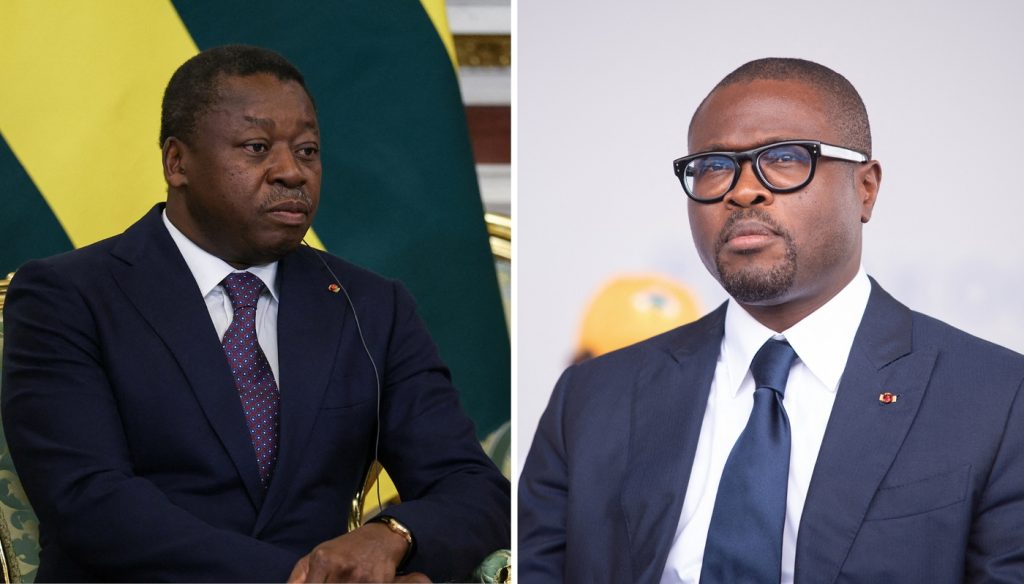
Wadagni was sworn in on May 24 in Cotonou, pledging stability, security, and stronger regional cooperation. However, it was the presence of Niger’s Prime Minister Ali Mahamane Lamine Zeine that drew the most attention, signaling a possible reopening of dialogue after months of strained relations.
A symbolic gesture after months of tension
Relations between Benin and Niger deteriorated sharply following the July 2023 coup in Niamey, which led to political rifts, border closures, and deepening mistrust.
Against this backdrop, Zeine’s attendance at the inauguration was widely interpreted as a diplomatic gesture aimed at easing tensions.
Speaking after the ceremony, the Nigerien prime minister suggested a shift in tone.
“I believe this is a new path opening up,” he said, emphasizing the need to strengthen ties and rebuild cooperation between both countries.
The visit comes amid broader tensions between Benin and the Alliance of Sahel States, a bloc formed by junta-led governments in the Sahel that has redefined regional alliances.
Wadagni’s pragmatic regional approach
Wadagni, a former finance minister and economist, is seen as a continuity figure following the presidency of Patrice Talon, but with a potentially more pragmatic diplomatic approach.
During his inauguration, he stressed the importance of rebuilding ties with neighbouring countries.
“With our neighbouring countries, we will place particular emphasis on deepening regional cooperation,” Wadagni said, framing his leadership around dialogue, stability, and mutual respect.
He also underscored a governance philosophy focused on responsibility and public service, stating that power should not be treated as a personal privilege.
Security and economic realities push engagement
Wadagni takes office at a challenging time for the region. Northern Benin faces rising jihadist attacks linked to the Group for the Support of Islam and Muslims, while Niger and Burkina Faso continue to battle insurgencies and navigate diplomatic isolation.
These shared security and economic pressures are increasingly forcing neighbouring countries to reconsider cooperation despite political differences.
Benin’s economy, strengthened during Wadagni’s tenure as finance minister, has shown resilience, but inequality and regional instability remain key concerns.
A cautious reopening of dialogue
While the inauguration does not resolve underlying tensions, it marks a possible turning point in relations between Benin and its Sahel neighbours.
The presence of Niger’s leadership in Cotonou suggests that communication channels are reopening, even if cautiously.
A region recalibrating
West Africa is undergoing a period of realignment shaped by security threats, political transitions, and shifting alliances. In this context, gestures of dialogue carry increasing weight.
The road to full normalization between Benin and Niger may be gradual, but the willingness to re-engage reflects a broader recognition that cooperation remains essential for stability and growth.
As a new generation of leadership emerges across the continent, such moments point to a future where dialogue, even after deep division, remains possible. In a region still defining its path forward, each step toward cooperation adds to a longer journey of building stronger, more connected African systems.