
AfDB 2026 Report Urges Bold Reforms to Unlock Investment and Accelerate Africa’s Growth

|
Getting your Trinity Audio player ready...
|
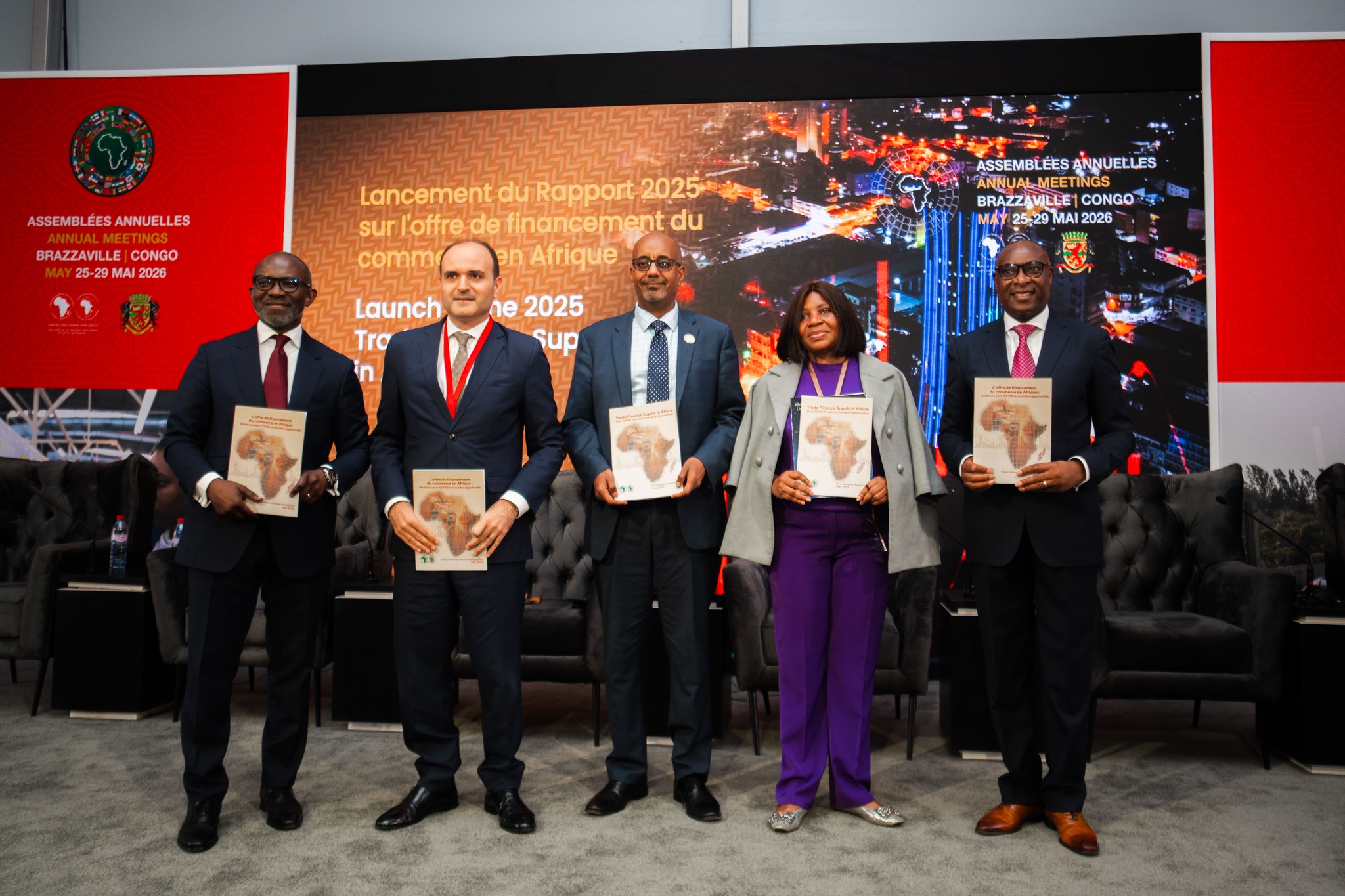
African and European policymakers have called for sweeping economic reforms to unlock investment, strengthen domestic revenue mobilisation, and accelerate regional integration following the launch of the African Development Bank’s African Economic Outlook 2026 during the Bank’s annual meetings in Brazzaville.
The discussions brought together senior officials from across Africa and Europe, including representatives from Tanzania, Botswana, the Republic of the Congo, Côte d’Ivoire, Finland, Sweden, the United Kingdom, the United Nations Economic Commission for Africa, and the United Nations Population Fund.
The report projects stronger average economic growth across Africa in 2026 despite ongoing global uncertainty. Growth is expected to be supported by stronger domestic demand, infrastructure spending, and expanding regional trade. However, rising debt servicing costs, climate related shocks, and declining concessional financing continue to place pressure on many African economies.
AfDB sees reasons for optimism
African Development Bank President Dr. Sidi Ould Tah said Africa’s economic outlook provides encouraging signs despite the challenges facing the continent.
He noted that policymakers must remain focused on addressing structural financing constraints while consolidating recent economic gains.
The report argues that African countries must increasingly mobilise domestic resources and attract long term capital as traditional development assistance declines and global economic shocks become more frequent.
Calls grow for fairer access to global capital
Representing the United Kingdom, Baroness Jenny Chapman said global investment flows into Africa remain far below the continent’s economic ambitions.
She called for reforms to international credit rating systems, arguing that exaggerated risk perceptions continue to increase borrowing costs for African governments.
Chapman also announced support measures including £70 million in hybrid capital for the African Development Bank and $3 billion in guarantees aimed at attracting additional private sector investment.
According to Chapman, Africa’s development ambitions will require investment measured in billions and eventually trillions of dollars rather than traditional aid driven approaches.
Tanzania and Botswana showcase domestic solutions
Tanzania’s Prime Minister Dr. Mwigulu Nchemba highlighted the country’s ability to finance more than 70 percent of its national budget through domestic revenues while maintaining economic growth above six percent.
He credited improved tax administration, digitalisation, and prudent public spending for the progress. Major projects including the Julius Nyerere Hydropower Project and Tanzania’s expanding standard gauge railway were cited as examples of infrastructure helping strengthen public confidence in taxation.
Botswana’s Vice President and Finance Minister Ndaba Gaolathe stressed the importance of efficient institutions. He revealed that Botswana had narrowed more than 7,000 investment proposals to 186 projects ready for execution through extensive screening processes.
Gaolathe warned that excessive bureaucracy could be as damaging to economic development as a shortage of capital.
Human capital and regional trade remain priorities
UN Population Fund Executive Director Dr. Diene Keita urged governments to place greater emphasis on investing in women, girls, and human capital, arguing that inclusive growth cannot be achieved without addressing inequality.
Meanwhile, Economic Commission for Africa Executive Secretary Claver Gatete highlighted Africa’s tax to GDP ratio of just 16 percent, the lowest globally. He encouraged governments to target a ratio closer to 25 percent while accelerating implementation of the African Continental Free Trade Area.
Gatete also called for stronger regional value chains in agriculture and critical minerals, sectors increasingly viewed as central to Africa’s long term economic transformation.
Finnish Governor Emmi Oikari echoed the importance of regional integration, saying larger integrated markets are more attractive to investors and can help create the scale needed for sustainable growth.
Building the foundations for Africa’s next growth phase
The discussions in Brazzaville reflected a growing consensus that Africa’s development will depend less on aid and more on investment, stronger institutions, and deeper economic integration. While challenges such as debt burdens, climate pressures, and limited fiscal space remain significant, many policymakers believe the continent has the tools needed to chart a different course.
Africa’s modern development journey remains relatively young, with many countries still building institutions and economic systems decades after independence. As governments pursue reforms, expand regional trade, and invest in infrastructure and human capital, the foundations for long term growth continue to take shape. The road ahead will require patience and persistence, but Africa’s economic story is still being written, and its next chapter may be defined not by its challenges, but by its capacity to transform them into opportunities.