
Republic of Congo’s Green Revolution Transforms Rural Farming and Boosts Food Security

|
Getting your Trinity Audio player ready...
|
For generations, farmers across the Republic of Congo relied on small scale subsistence farming to support their families. Limited access to equipment, low productivity levels, and poor infrastructure often left rural communities struggling to expand agricultural production and improve their livelihoods.
Today, that landscape is beginning to change.
Supported by the African Development Bank Group, the Integrated Agricultural Value Chains Development Project, known as PRODIVAC, is helping modernise agriculture across the departments of Pool, Plateaux, Bouenza, and Niari. Backed by €73.2 million in funding, the initiative aims to strengthen food security, improve productivity, and create new economic opportunities for rural communities.
Modern Equipment Replaces Traditional Methods
In many farming communities, mechanisation is replacing labour intensive farming practices that have dominated for decades.
At the Ngolonga Protected Agricultural Zone in Bouenza Department, tractors and seeders are increasingly replacing hoes and machetes. Farmers now have access to improved seeds, agricultural inputs, and modern cultivation techniques designed to increase production while improving resilience to climate related challenges.
Sandrine Mobakou, a member of the Bokosongosite association, described the transformation as dramatic.
“If we compare this to what we used to do before, it is like night and day,” she said.
According to the African Development Bank, PRODIVAC focuses not only on increasing production but also on supporting entrepreneurship and strengthening institutional capacity.
“The objective of PRODIVAC is to strengthen agricultural production, develop local entrepreneurship and improve the capacities of young people and institutions,” said Célestine Mengue Medou, agriculture portfolio expert at the African Development Bank Liaison Office in the Republic of Congo.
Investing in Climate Resilience and Young Farmers
The programme has also received an additional $8 million grant from the Climate Investment Funds Forest Investment Program.
The funding supports environmental sustainability and climate resilience initiatives while helping rural communities adapt to changing weather patterns. More than 39,000 people have already benefited from the programme.
Training has become another major pillar of the project.
Nearly 600 young people have received instruction in modern agricultural technologies, creating opportunities for a new generation of agricultural entrepreneurs and helping transfer valuable knowledge into rural communities.
For local agricultural groups, these programmes are helping strengthen skills while encouraging younger generations to view farming as a viable business opportunity.
Rising Incomes Across Rural Communities
The economic benefits are becoming increasingly visible.
The project has been extended through 2027 and is expected to ultimately benefit more than 50,000 rural producers through improved farming practices and technological support.
Farmers report higher yields and expanding operations.
Joseph Mouanda, president of the Ngolonga Protected Agricultural Zone, said his group generated nearly $16,000 in seasonal revenue from a half hectare pepper farm. The earnings helped finance his child’s studies abroad.
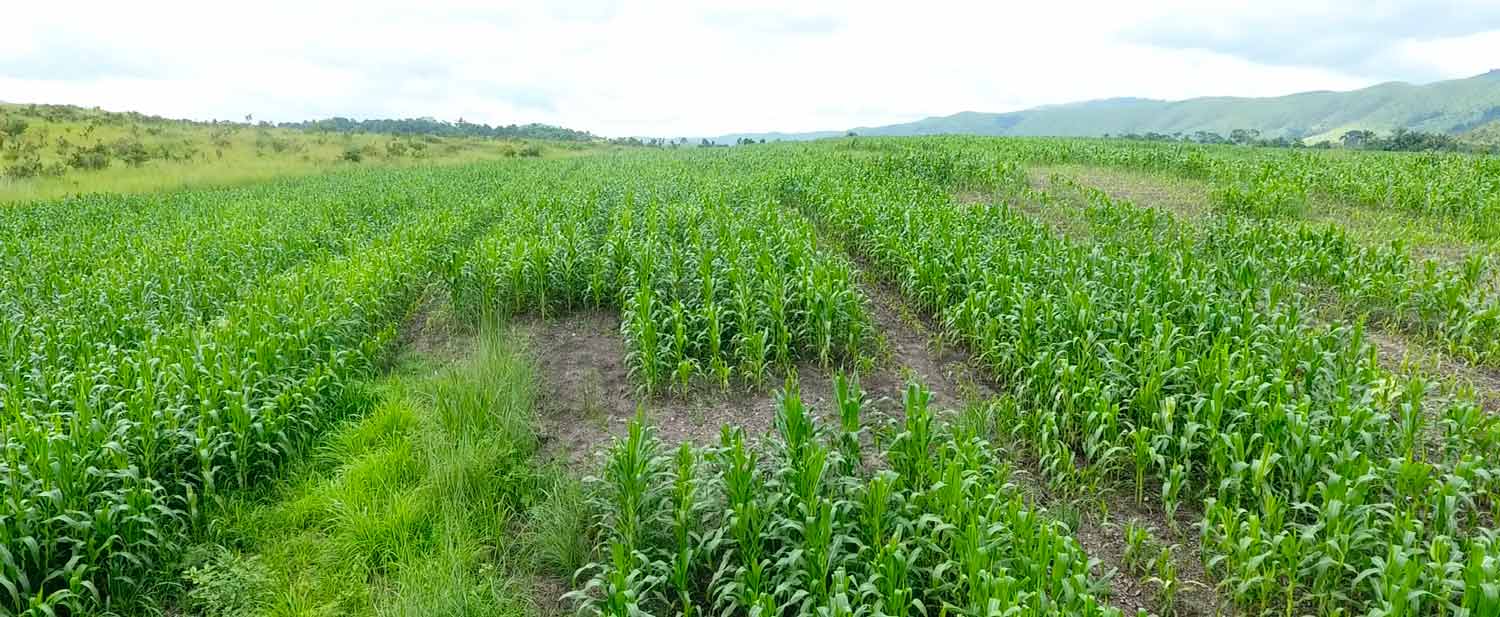
Meanwhile, Nzambi Basile, president of the Maboko na Ntoto group in Niari, said his farm expanded from four hectares to fifteen hectares, with maize yields reaching approximately four tonnes per hectare.
“PRODIVAC provides inputs and the fields are ploughed free of charge,” he said.
Strengthening Food Sovereignty
The Republic of Congo continues to prioritise reducing dependence on imported food while improving domestic agricultural production.
Beyond supporting production, the project is also encouraging financial inclusion by helping producers open bank accounts and gain access to formal financial services.
Government officials view agriculture as a key driver of economic development and long term resilience.
Agriculture and Livestock Minister Paul Valentin Ngobo said the country aims to cultivate 20,000 hectares of maize and begin producing seeds locally by 2027.
The expansion of cultivated land, improved storage facilities, and stronger agricultural extension services are expected to support these ambitions.
Planting the Foundations for Tomorrow
The transformation taking place in communities such as Ngolonga and Loudima demonstrates the growing potential of African agriculture when investment, technology, and local expertise work together. While challenges including climate change and food security remain significant, the progress seen across the Republic of Congo highlights how strategic investment can unlock new opportunities for rural communities.
Africa’s agricultural future will not be built overnight. Yet projects like PRODIVAC show that meaningful progress is possible when farmers are equipped with the tools, knowledge, and resources needed to succeed. As the continent continues to invest in food production, innovation, and young entrepreneurs, stories like this serve as a reminder that Africa’s next chapter of growth is already taking root in its fields and farming communities.