
Zambia Election Gives Hichilema Second Term as Economic Test Enters New Phase
By The Voice of Africa

|
Getting your Trinity Audio player ready...
|
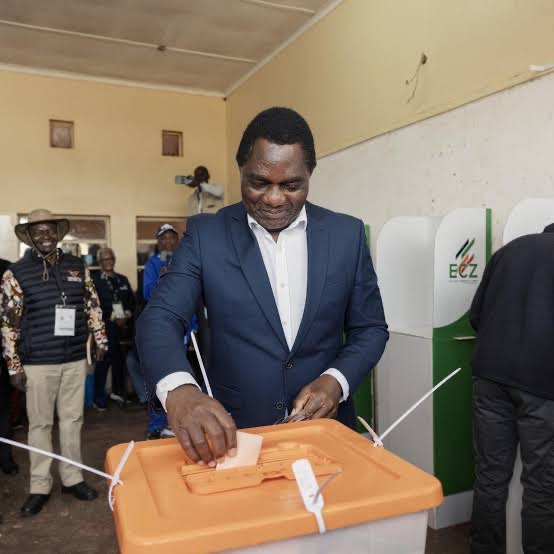
Zambian President Hakainde Hichilema has secured another five years in office after winning the country’s presidential election, giving his government a renewed mandate as Zambia attempts to turn economic recovery into broader gains for ordinary households.
Results released by the Electoral Commission showed Hichilema defeating his main challenger, Brian Mundubile. Hichilema secured more than 60 per cent of the vote, comfortably ahead of Mundubile, who received about 38 per cent.
The result keeps Hichilema at the helm of one of Southern Africa’s important democracies and gives his administration another term to pursue the economic programme that has been central to his presidency.
A significant part of Hichilema’s first term was dominated by Zambia’s debt crisis and efforts to restructure the country’s obligations. His re-election now shifts the political conversation towards what comes after stabilisation and whether improvements at the national level can translate into meaningful economic gains for Zambians.
Hichilema has set an ambitious economic agenda for his second term, including plans to significantly expand the size of Zambia’s economy, increase employment and create greater economic opportunities for households.
The election, however, also revealed the political limits of relying on improvements in headline economic indicators when many citizens continue to experience financial pressure.
Mundubile drew support from voters frustrated by continuing economic hardship, demonstrating that the government’s economic record will remain under close public scrutiny despite the scale of Hichilema’s victory.
The challenge facing the president is therefore changing. Debt restructuring and economic stabilisation can create the foundations for growth, but political confidence will increasingly depend on whether those gains become visible in employment, incomes, investment and everyday living conditions.
That places significant expectations on Hichilema’s second administration. A renewed electoral mandate provides political space to continue reforms, but it also comes with an expectation that the next phase of economic management will produce results that reach beyond government balance sheets.
The election is also significant within the wider African democratic landscape. Zambia’s political direction will continue to be watched beyond its borders at a time when questions surrounding elections, governance, economic accountability and public confidence remain central across much of the continent.
For Zambia, the next chapter is therefore less about proving that an economy can recover on paper and more about ensuring citizens can feel that recovery in their lives. That challenge is familiar across Africa. Many of the continent’s democracies are still relatively young institutions carrying immense expectations, and every peaceful election offers another opportunity to strengthen the relationship between political choice, accountable government and tangible development.
Zambia election, Hakainde Hichilema, Zambia president, Zambia 2026 election, Hichilema second term, Zambia politics, Zambia democracy, Zambia vote, Zambia presidential election, Brian Mundubile, Zambia opposition, Zambia economy, Zambia debt restructuring, Zambia economic recovery, Zambia jobs, Zambia household pressures, Zambia living costs, Zambia copper, African elections, Southern Africa politics, African democracy, election results Zambia, Zambia election results 2026, Hichilema re elected, Zambia electoral commission, Zambia governance, African political news, Zambia development, Zambia debt crisis, Zambia growth, Zambia reform agenda, Zambia second term, Hichilema economic agenda, Zambia voters, Lusaka news, Zambia breaking news, Africa breaking news, Africa politics, Southern Africa news, Zambia leadership, Zambia public policy, Zambia fiscal reform, Zambia debt recovery, Zambia economic expansion, Zambia investment, Zambia employment, Zambia households, Zambia cost of living, Zambia democratic process, African governance, Zambian elections, Zambian politics, Hichilema victory, Hichilema election win, Mundubile election result, Zambia 2026, Zambia news today, African election news, African presidential elections, Zambia constitutional democracy, Zambia national elections, Zambia political stability, Zambia economic policy, Zambia debt deal, Zambia IMF history, Zambia copper economy, Zambia development agenda, Zambia reform programme, Zambia economic outlook, Zambia public finances, Zambia voters 2026, Zambia election turnout, Zambia election commission results, Zambia president elect, second term Hichilema, Hichilema Zambia, Zambia political transition, Zambia democracy 2026, Southern African democracy, Africa election results, Zambia economic challenges, Zambia growth strategy, Zambia jobs policy, Zambia household economy, Zambia poverty pressures, Zambia debt restructuring success, Zambia governance news, Zambia election analysis, Zambia political news today, Hichilema second term priorities, Zambia economic recovery 2026, Zambia debt and growth, Zambia election latest, Zambia president 2026, African democracy news, Zambia campaign, Zambia voters economic concerns, Zambia debt reform 2026, Hichilema reelection 2026, Zambia national politics