
Guinea’s Junta Leader Mamady Doumbouya Declares Presidential Bid, Breaking Earlier Promise

|
Getting your Trinity Audio player ready...
|
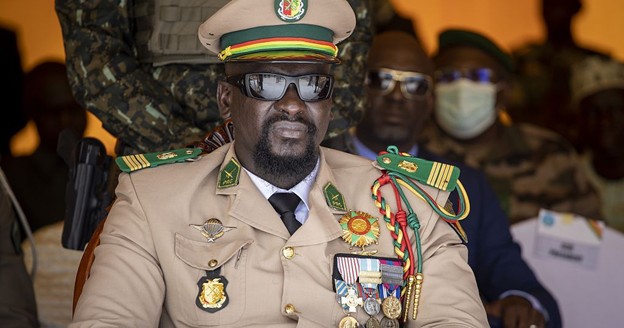
Guinea’s transitional leader General Mamady Doumbouya has formally declared his candidacy in the country’s December 28 presidential election, marking a dramatic reversal from his earlier pledge not to run after seizing power in a 2021 coup.
The announcement came Monday as Doumbouya personally submitted his candidacy papers to the Supreme Court in Conakry, just before the deadline closed. The election, billed as the first since the military takeover, is meant to restore civilian rule—but the move has ignited controversy both inside and outside Guinea.
From Coup Leader to Candidate
When Doumbouya ousted former President Alpha Condé in September 2021, he promised a transition toward democracy and explicitly stated that no members of the military junta would contest future elections.
However, a new constitution approved in a September 2025 referendum—drafted under his administration—quietly overturned that commitment. It allows military figures to run, setting age limits between 40 and 80 and requiring candidates to reside in Guinea.
The constitutional rewrite, critics argue, was designed to pave the way for Doumbouya’s presidential ambitions.
Opposition Cries Foul
The coalition of opposition parties and civic movements known as Forces Vives de Guinée condemned the decision, calling it a “betrayal of the democratic transition.”
Under Doumbouya’s rule, Guinea has faced media suspensions, internet restrictions, and violent crackdowns on pro-democracy demonstrations. Civil society groups warn that these trends have created a climate of fear ahead of the vote.
Two major opposition parties—the RPG Arc-en-Ciel (linked to former President Condé) and the UFDG (led by Cellou Dalein Diallo)—have been excluded from the contest, raising doubts about the election’s legitimacy. The Supreme Court is expected to publish the final list of approved candidates by November 13.
A Test for West Africa’s Political Soul
Doumbouya’s candidacy adds to a troubling pattern across the Sahel and West Africa, where military leaders—from Mali to Burkina Faso—have extended their hold on power through rewritten constitutions or delayed transitions.
While some citizens see these figures as symbols of stability and sovereignty after decades of failed governance, others fear a regression to personalized rule dressed in patriotic language.
For Guinea, a nation rich in bauxite and youth energy but scarred by economic inequality, the coming election will determine whether its transition marks renewal—or repetition.
The Voice of Africa Says
Africa doesn’t need new strongmen—it needs strong systems.
Guinea’s youth, who once danced in the streets celebrating a coup they thought would reset the nation, now face a familiar dilemma: how to demand democracy without being silenced by it.
The world will watch on December 28—but the real judgment will come from the people, not the courts.