

|
Getting your Trinity Audio player ready...
|
In a reciprocal move that underscores growing diplomatic strains, the government of Mali has introduced a mandatory visa bond of up to $10,000 for U.S. nationals seeking to enter the country for business or tourism. The decision mirrors a similar requirement recently enforced by the United States on Malian citizens under the Trump administration’s tightened immigration measures.
A Tit-for-Tat Visa Policy
Mali’s Ministry of Foreign Affairs confirmed on Sunday that the new bond system aims to maintain parity in visa treatment after Washington unilaterally imposed similar restrictions. According to the ministry, the decision to “establish an identical visa programme” was driven by principles of reciprocity in international diplomacy.
The U.S. Embassy in Bamako responded by reiterating that the American bond system was part of broader efforts to “protect U.S. borders and strengthen national security.” However, the introduction of Mali’s countermeasure signals a cooling in bilateral relations between the two nations, despite earlier efforts to restore cooperation.
Strained Relations Despite Diplomatic Overtures
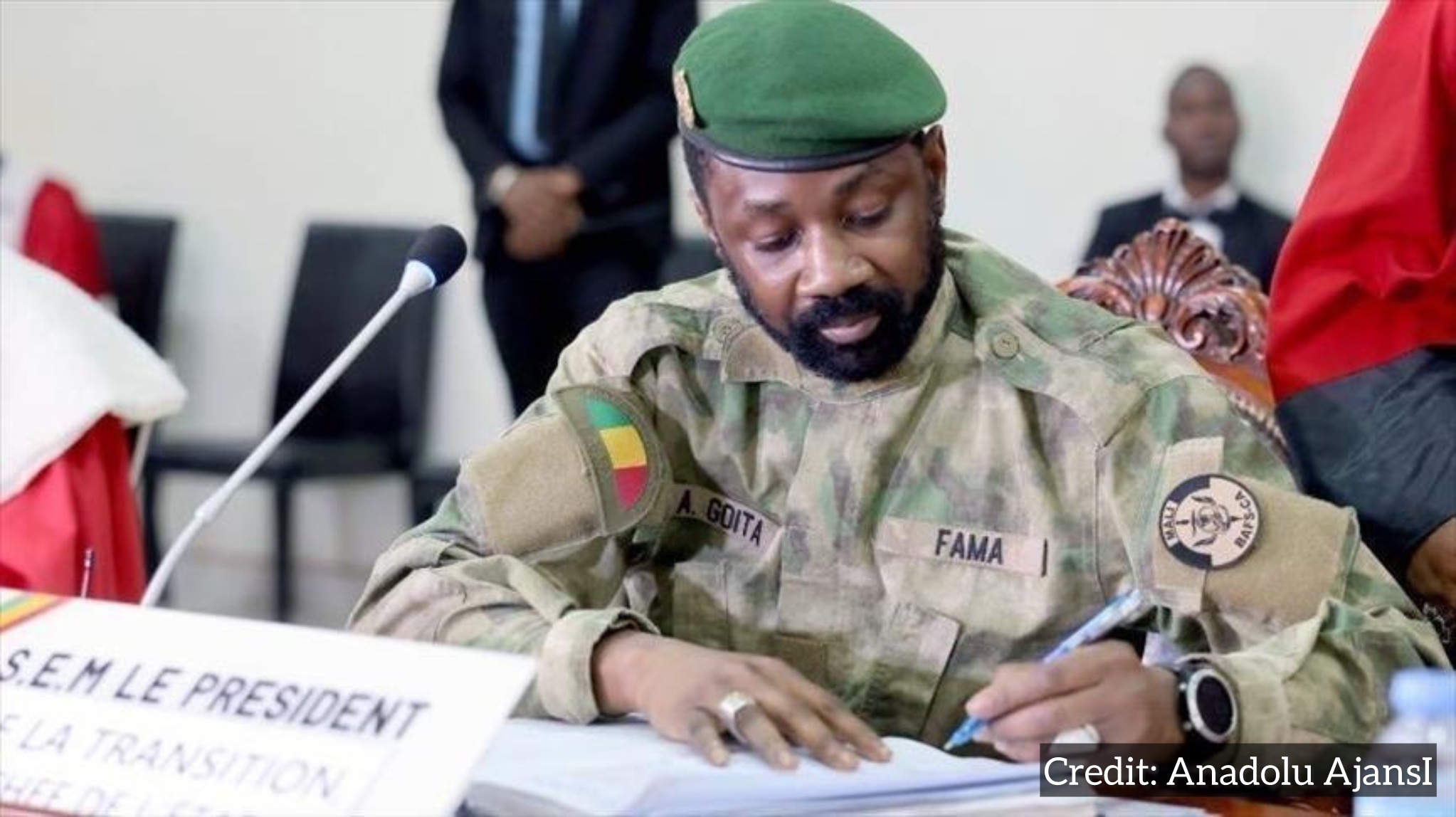
Just a few months ago, U.S. officials visited Mali to discuss counterterrorism collaboration, economic cooperation, and potential U.S. investment in Mali’s lucrative gold and lithium sectors. These talks were seen as a step towards rebuilding relations that had deteriorated following Mali’s 2021 military coup, which brought General Assimi Goïta to power.
Since taking office, Goïta has redirected Mali’s foreign alliances, distancing the nation from Western influence and deepening ties with Russia. The government expelled French troops, long involved in counterterrorism operations in the Sahel, and invited Russian military contractors from the Wagner Group, now reorganized under Moscow’s Africa Corps, to assist in combating Islamist insurgents.
Regional Context and Wider Fallout
The visa bond dispute comes amid broader tensions between Washington and several West African states led by military regimes. Recently, Burkina Faso’s junta also clashed with the U.S. government after refusing to accept deportees from America. In response, Washington suspended visa issuance for Burkinabe citizens.
Mali’s Foreign Minister, Karamoko Jean-Marie Traoré, criticized what he described as coercive diplomacy, suggesting that U.S. pressure tactics amounted to “blackmail.” His comments followed reports that Bamako rejected a U.S. proposal to resettle migrants from third countries within Mali’s borders.
A Reflection of Shifting Global Alliances
Analysts view Mali’s latest policy as more than a bureaucratic tit-for-tat it represents a deeper shift in geopolitical alignments across West Africa. As the U.S. and its allies attempt to re-engage with the region, military-led governments in Mali, Niger, and Burkina Faso are consolidating partnerships with Russia, often citing sovereignty and mutual respect as guiding principles.
The $10,000 visa bond now places Mali among a growing list of nations responding assertively to U.S. immigration and visa measures. While the move may complicate travel and business exchanges between the two countries, it also underscores a changing diplomatic landscape where African states are increasingly asserting reciprocity and independence in their foreign policies.